Indo-Myanmar border management : A relook ?
|


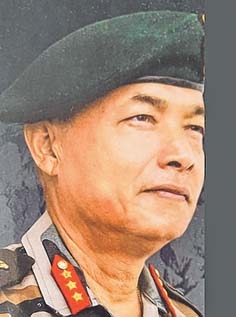
Lt Gen (Dr) K Himalay Singh, Retd
Background
The 1648 Km long Indo-Myanmar border is one of the most ecologically fragile, interspersed with water bodies, low mountains, thick jungles and devoid of modern infrastructure even today. Thinly populated by various small and margi-nalised ethnicities on both sides of the border, the population densities in most areas are less than 30 per sq Km. The demography consists of hundreds of small and large ethnic groups whose languages and dialects are mostly Indo- Tibetan and Tibeto-Burmese groups of languages. Notable languages on the Indian side are Assamese, Nagamese (A mixture of Assamese and a few dialects of Naga ethnic groups), Manipuri, Lushai besides a number of other dialects. On the Myanmar side of the border, Shan, Chin, Burmese are the major languages besides many other smaller dialects.
Geography of the area has influenced the socio-cultural dimensions of the peoples in the area. The multiple ethnic groupings, multiple number of dialects and culture are a direct manifestation of geographical realities. These border- lands were populated by mostly ‘wild and savage” people who were organised at village or clan levels for survival and administration devoid of any semblance of a ‘State’ or a kingdom till the entry of the British colonisers during late 18th century and early 19th century except the kingdoms of Manipur (Mekley) and the Ahom kingdoms on the Indian side and the Ava Kingdom on the Burmese side. There were principalities such as Jaintia in present day Meghalaya and Shan kingdom on the Myanmar side too. The Ahom kingdom subdued many ethnic groups astride and neighbouring areas in the Patkai and Naga hill ranges and the Brahmaputra valley. The Manipur Kingdom similarly subdued many smaller groups to establish the kingdom during 13/14th centuries.
Border Between the Kingdom of Manipur and Ava Prior to Arrival of the British
A series of conflicts and frequent wars between the major kingdoms of Manipur and the Burmese Ava Kingdom were fought over dominance and control of territories in the region during 17-18th centuries of which the Manipuri campaigns deep into Burma at times well beyond the traditional boundary of Chind- win (Ningthee) river between the two during 1647, 1692, 1717, 1724, and 1749 were notable. The Ava (Burmese Kingdom) often claimed the kingdom of Manipur as one of the tributary States at various times of history. Burmese campaigns into Manipur and adjoining areas of Assam to subdue continued in a reciprocal manner and the last of Burmese invasion being during 1819-26 after which the Treaty of Yandaboo was signed between East India Company and the Ava kingdom. (The kings of Manipur and Assam had asked for help from East India Company to drive away the Burmese forces). Col Johnstone, the erstwhile political agent in the Kingdom of Manipur wrote “The territories of Manipur varied according to the mettle of the rulers. At times their territory extended to far east of Chindwin river and sometimes only upto the river only”.
This establishes the fact that the Eastern boundary of Manipuri kingdom were along the river Chindwin for considerable period of time. In the pre-British era, no border pillars were established, nor clearly defined borders as was the case in many parts of the world. Captain Pembarton, another British surveyor who surveyed this boundary opined “Territories of Mu-neepore (Manipur) have frequently extended three to four days journey east of Ningthee River (Chind-win).” Pembarton Report forms the basis of the emergence of Indo-Myanmar border, post arrival of the British in the region. Pembarton Report and the Boundary Post Partition of Burma from India Consequent to the Treaty of Yandaboo, The Burmese relinquished their claim on Assam, Manipur and the Arakan and the broad boundary was recognised along the Arakan mountain ranges. Whereas Pembarton report 1834 established the boundary between Burma (Myanmar) and British India/Manipur Kingdom determined the Kabaw valley of Manipur (Areas West of Ningthee River and the Patkai Hills) to Burma for some strange reasons. The Patkai Hills were to be considered as the boundary as per his report thereby including the Hill areas of Assam (present day Naga-land, Parts of Arunachal Pradesh, Mizoram) and Manipur on Indian side of the border.
These borders were further refined at various times in 1881, 1894. In 1894 Col Maxwell, the British political agent ensured that 38 pillars were erected for the first time along the border. He also demarcated the boundary between Manipur and Chin hills of Burma during 1894. In 1935, Burma was carved out of the British Indian territory as a separate entity under Govt of Burma Act 1935 which was passed by the British Parliament. During this partition, the boundary was once again not demarcated except mentioning that the Burma will comprise of all “British territories lying to the east of Bengal, Manipur, Assam and tribal areas of Assam” (Tribal areas of Assam included present day Naga- land, Parts of Arunachal and Mizoram). No specific boundary details were earmarked. It is alleged that many ethnic groups such as many Naga, Chin-Kuki, Chakma, Meiteis (Kathe Shans), and a few other tribes have been left on both the sides of the international boundary there by separating these groups on both sides of the IB. Similarly, at least over one million Indians from other parts of the country apart from the tribals in the borderlands continued to remain in the new country. The borders thus remained porous without any semblance of border management even after India’s independence in 1947.
Free Movement Regime ? And Free for All since India’s Independance
The birth of “Free Movement Regime thus took place when both India and Burma amended their passport Rules to allow” free movements of bonafide citizens of both the countries and who are tribes ordinarily resident within 40 kms were exempted from passport or visa requirements to move into the other country upto 40 kms vide MHA 4/15/50 Rule 1950.
(To be contd)