Choked : The geography of strangulation from Hormuz to Manipur
|



Dr Raj Singh
When headlines announce that the Strait of Hormuz is under threat, most readers see a distant geopolitical crisis - oil tankers halted, prices rising, tensions escalating. It feels far away.
But for those of us in Manipur, the idea of a “chokepoint” is not abstract. It is a lived reality.
We have seen highways blocked for weeks, sometimes months. We have watched essential supplies vanish, fuel prices skyrocket, and ordinary lives squeezed - not by foreign powers, but by our own internal fractures.
What the world fears at Hormuz, Manipur has already experienced in miniature. And that is where the deeper story begins.
A World Held Together by Narrow Passages
Globalization gives the impression of a seamless, interconnected world. But beneath this illusion lies a fragile truth: the world runs through a handful of narrow corridors, on sea and land. Nearly 90% of global trade moves by sea, and much of it must pass through chokepoints such as:
* Strait of Hormuz
* Strait of Malacca
* Bab el-Mandeb
* Suez Canal
* Panama Canal
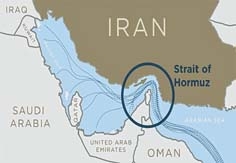
These are the arteries of global commerce. Block one, and the world feels the pain instantly. But there is a second, less discussed category - inland chokepoints, which do not merely disrupt economies, but threaten the very unity of nations.
Hormuz: When a Narrow Strait Controls the World
The Strait of Hormuz is the world’s most sensitive energy valve. Nearly one-fifth of global oil flows through this narrow passage.
Iran does not need to permanently block it. The threat of disruption is enough.
* Insurance premiums surge
* Shipping slows
* Oil prices spike
* Economies tremble
This reveals a crucial principle:
Power today lies not in occupying territory, but in controlling bottlenecks.
Malacca and Suez: The Efficiency Trap
The Strait of Malacca carries the lifeblood of Asian economies. The Suez Canal and Bab el- Mandeb connect Asia to Europe. These routes are optimized for efficiency, not resilience.
When disrupted:
* Ships reroute around Africa
* Transit times jump by weeks
* Costs multiply
A single grounded ship in Suez once froze billions of dollars in trade. Imagine what coordinated disruption could do.
The Hidden Layer: Inland Chokepoints
Now we arrive at what is beyond the obvious.
While maritime chokepoints disrupt trade, inland chokepoints can break nations apart.
The Siliguri Corridor: India’s Strategic Nerve
The Siliguri Corridor, located in West Bengal, is a narrow strip, barely 20 km wide, that connects mainland India to its Northeastern states, including Manipur.
Surrounded by:
* Nepal
* Bhutan
* Bangladesh
* China
This corridor carries:
* Highways
* Railways
* Fuel pipelines
* Military logistics
If disrupted, the Northeast is effectively cut off from the rest of India.
This is not theoretical. It is a permanent strategic vulnerability.
Suwalki Gap: Europe’s Fragile Link
Between Poland and Lithuania lies the Suwalki Gap.
It connects NATO’s Baltic members to Europe, squeezed between:
* Kaliningrad
* Belarus
If closed, the Baltic states become isolated overnight.
Other Strategic Land Corridors
Across the world, similar vulnerabilities exist:
* Wakhan Corridor (Afghanistan–China link)
* Khyber Pass (Pakistan–Afghanistan gateway)
* Isthmus of Kra (Thailand potential canal bypass)
* Darién Gap (Panama–Colombia break in connectivity)
Each represents a point where geography compresses power.
Manipur : A Microcosm of Global Chokepoint Politics
Here lies the most uncomfortable truth.
What global powers fear in Hormuz or Malacca, Manipuris have experienced on NH-2 and NH-37.
Highways, our lifelines, have often been:
* Blocked for months
* Used as leverage in ethnic conflicts
* Turned into tools of economic strangulation
When these routes are cut:
* Fuel becomes scarce
* Food prices soar
* Medicines run out
* Daily life collapses
This is not war in the conventional sense.
This is chokepoint warfare at a societal level.
And the tragedy is deeper:
Unlike global chokepoints controlled by rival nations, Manipur’s chokepoints are often blocked by its own people.
The Political Logic of Blockades
Why do chokepoints become weapons? Because they are:
* Easy to control
* Hard to bypass
* Highly visible in impact
Blocking a highway in Manipur or a strait like Hormuz creates immediate pressure without full-scale conflict.
It is a strategy of maximum impact with minimal force.
From Manipur to the World: The Same Pattern
Whether it is:
* Iran in Hormuz
* Houthis near Bab el-Mandeb
* Russia near the Suwalki Gap
* Or blockades in Manipur
The logic is identical:
Control the narrow point, and you control the narrative.
The Future of Geopolitics: Chokepoint Wars
Looking ahead, three trends are becoming clear:
1. Chokepoints Will Replace Battlefields
Wars may not begin with invasions, but with disruptions.
2. Hybrid Warfare Will Dominate
Blockades, cyber attacks, and economic pressure will replace conventional combat.
3. Internal Chokepoints Will Matter More
Countries will face threats not just from enemies, but from internal fractures.
India’s Lesson, and Manipur’s Warning
India must treat chokepoints, especially the Siliguri Corridor, as strategic priorities:
* Develop alternative routes through Bangladesh or Myanmar (Kaladan Project?)
* Strengthen infrastructure redundancy
* Enhance regional diplomacy
But the lesson from Manipur is even more urgent:
A Nation is most vulnerable not at its borders, but at the points where its own people can choke it. Manipur’s problem is even more complicated with the area domination competitions among ethnic groups at strategic commercial flashpoints like Moreh (Indo-Myanmar border town), Jiribam (the state’s only railhead town), Kangpokpi (on Highway 2) and Litan (on Imphal-Ukhrul Road).
Conclusion: The Narrow Edges of Power
We often think power lies in vast territories, large armies, or economic strength. But the real power of the modern world lies in narrow spaces:
* A strait a few kilometres wide
* A corridor barely 20 km across
* A highway passing through fragile terrain
These are the invisible nooses of global power or ethnic contestants.
And beyond the obvious, the lesson is stark: The future of geopolitics will not be decided in capitals, but in corridors. For when a chokepoint closes, it does not just stop movement - it stops life itself.