Jessami : Rediscovering Manipur’s frontier of history and hope
|


Albrosh Mayengbam
Jessami is a village located in the remote northern corner of Manipur’s Ukhrul district, directly bordering the Meluri district of Nagaland. The village holds historical significance because of its WWII legacy, eco-tourism potential, and its strategic importance as a potential transit point along the Kohima–Imphal–Avangkhu corridor, a proposed cross-border trade point on the India–Myanmar border. However, despite its strategic position, cultural wealth, and natural beauty, Jessami has long been on the periphery of development. Nevertheless, gradual changes, such as ongoing road construction and improved connectivity, are beginning to renew hope for the future of this once-forgotten village.
The village is in a key location, acting as a gateway that links Ukhrul and Kohima with Meluri. From there, it connects to the Avangkhu International Trade Centre on the Indo-Myanmar border. This makes the village well-placed for cross-border trade, tourism, and better regional connections. The people of Jessami, also known as Yessami, are part of the Chakhesang tribe. The Chakhesang community is made up of three sub-tribes: Chokri, Khezha, and Sangtam. Together, they share a heritage that has developed over many generations. For the people of the region, this shared identity is central to their community, helping them preserve their traditions, customs, and sense of belonging.
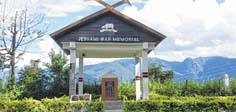
Jessami has a significant historical background, having played an important role during World War II. In the Battle of Jessami, which took place in 1944, the 1st Battalion of the Assam Regiment displayed remarkable valour in fighting the advancing Japanese army. Despite being outnumbered and lacking equipment, they fought courageously for several days. Their bravery delayed the Japanese troops advancing towards Kohima, providing the Allied army with sufficient time to prepare defensive positions. Although this incident may have been overshadowed by the Battle of Kohima or the Battle of Imphal, Jessami has the potential to rise as a military tourism destination.
Beyond its historical importance, the region surrounding Jessami holds significant ecological value. Its forests provide a natural habitat for the Nongin, also known as Mrs Hume’s pheasant, the State bird of Manipur. Renowned for its vibrant plumage and rarity, the Nongin symbolises the area’s conservation efforts, with Jessami hosting the world’s only Mrs Hume’s Pheasant Community Reserve dedicated to protecting this unique species.
Beyond this notable bird, the region is home to a wide variety of bird species, such as the Asian House Martin, Crimson Sunbird, White-crested Laughing Thrush, and Great Spotted Woodpecker, all of which indicate the health of the forest ecosystem. The presence of both resident and migratory birds, combined with the dense hills and pristine environment, highlights Jessami as an ideal destination for bird-watching and trekking.
I recently undertook a field visit to Kohima, Jessami, and Ukhrul as part of the primary data collection for my dissertation, conducted under the Department of National Security Studies at Manipur University. On the way from Kohima to Jessami, after about 2 hours of driving, our vehicle stopped for a break at Pfutsero, the homeland of the Chakhesang Nagas, which is the highest and coldest town in Nagaland. The area appeared more developed than Jessami, which is only 40 km away. This gave me insight into the difficulties faced by the locals of Jessami, who often have to depend on nearby towns like Meluri or Pfutsero for basic needs. Upon reaching the village, I was grateful to receive a lift from a kind Tangkhul gentleman who took me to Ukhrul.
During my visit, I had the privilege of interacting with locals from Jessami and Ukhrul, especially Dr Weyepe N Mekrishu, a representative of Jessami Kaleidoscope Tourism & Wildlife Conservation, an organisation promoting eco-agro, cultural, and war tourism in Jessami. The interaction included sharing information about Jessami, highlighting its scenic landscapes, biodiversity, and tourism potential. According to Dr Mekrishu, the ongoing road project undertaken by HVS Construction has impressed the locals. Locals expressed optimism about the pace of construction work, which has raised hopes that the project will alleviate the region’s isolation.
Despite these positive developments in roads and infrastructure, the region continues to face several challenges. The area remains under-equipped, and access to adequate healthcare is limited, forcing residents to seek better treatment at facilities such as the Community Health Centre in Meluri and the District Hospital in Phek, Nagaland. Educational opportunities are also constrained; although the Jawahar Navodaya Vidyalaya (JNV) Jessami provides residential schooling from middle to higher secondary levels, options remain limited for many students. More attention and coordinated efforts are needed from the Government of India, the Government of Manipur, and local organisations such as the Jessami Village Council.
Jessami represents far more than a remote border settlement. Its historical legacy, marked by the Battle of Jessami; ecological significance through the Nongin Community Reserve; and strategic position along the Kohima–Imphal corridor toward the emerging trade centre of Avangkhu collectively highlight its untapped promise. Coupled with opportunities for trekking, adventure tourism, bird-watching, and wildlife photography, Jessami stands as a symbol of neglected potential where recognition, sustainable investment, and balanced development must converge to transform this frontier into a vibrant hub of conservation, remembrance, and future economic growth.