Intricacies between NRC, Census and Delimitation in Manipur
|


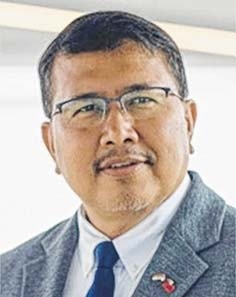
L Ibotombi Singh (Retd Brigadier)
(The main issue about errors in census data of 2001 in Manipur which was manifested by abnormal decadal growth of population in some hill districts, despite order by the Guwahati High Court for a fresh census in three hill districts, has now been swept under the carpet. The issue of “errors in census data of 2001” was never raised by the stake holders of Manipur while hearing on indefinite deferment of delimitation process in March 2023, April 2025 and April 2026 in the Supreme Court. Thus, skewed growth in population in some districts or Sub-Division in 2001 census have now been ratified as de-facto equilibrium census by the census of 2011 and further by the attempt to conduct “Census 2021” in Manipur.)
In June 2003 during Iraq War (Second Gulf War), there was intense pressure from the United States to join the coalition by sending a divisional size force of Indian Army to Iraq. Washington had managed to get then Defence Minister George Fernandes, Home Minister LK Advani, External Affairs Minister Jaswant Singh and Army Chief NC Vij onboard for sending Indian troops. Even our reckless media, both print and electronic, were in favour of committing Indian boots in Iraq as part of coalition forces. In turn, the Indian Army was quite ready to go, quite prepared. They had identified the units that would be deployed and it seemed that it would happen.
Only three years earlier in the United States Congress, India’s then Prime Minister Atal Bihari Vajpayee had called India and the US “natural allies”. Under these circumstances, how could New Delhi now reject America’s plea for ‘assistance’ in Iraq was the dilemma ? The then Deputy PM Advani and Defence Minister George Fernandes were amenable to the request, Finance Minister Jaswant Singh and Foreign Minister Yashwant Sinha were against it. Vajpayee personally did not want to send Indian troops to Iraq without a clear UN mandate. And some members of his own Government were open to the idea to streng-then ties with Washington.
To counter the external US pressure and take his Government onboard, both ruling and Opposition, Vaj-payee tactfully orchestrated a scenario where he could claim his “hands were tied” by democracy.
Thereafter, Vajpayee invited leaders of the Left parties, including AB Bardhan and Harkishan Singh Surjeet, for tea at his residence, without immediately revealing the agenda. Vajpayee indicated there was pressure from the US to send troops. The Left leaders told him they were strongly opposed and were launching a Nation-wide campaign against it. When they told him the public response was encouraging, Vajpayee reportedly replied, “But I can’t hear anything,” implying they needed to make their protests louder and more visible so he could use them as leverage. The Left took the hint and amplified their protests, giving Vajpayee the necessary “public sentiment” argument to tell the US that Indian democracy would not allow for the deployment.
In the recent past in Manipur, there has been huge chorus from the public, student organisations, CSOs, NGOs, politicians and other organisations against holding of “Census 2021,” which otherwise has commenced in India from 01st April onwards. Originally scheduled for 2021 but was delayed due to the COVID-19 pandemic. The people of Manipur, in particular people in the valley, are against collecting detailed information on its roughly 38 lakh population, as there are many illegal migrants from outside the State including Myanmar and Bangladesh, roughly accounting to 10 percent of the present estimated population.
Some of them had illegally entered into Mani-pur over many years, because of Free Movement Regime 1970, though suspended since February 2024, but many of these migrants have indulged in cross pollination with the indigenous people of the State. The protests for “NRC First,” followed by “Census in Manipur” has been made by few people because of ‘true love for the State’, some for political gains and some as blind followers. Notwithstanding above, there is, thus, a requirement of identifying these illegal migrants and initiate corrective actions by way of carrying out NRC 2023, an amendment to the Citizenship Act 1955.
The present head of the ruling dispensation in Mani-pur need to take a cue from the story of late Prime Minister Atal Bihari Vajpayee, as to how he avoided sending Indian troops to Iraq in 2003 by masterfully leve-raging domestic opposition and creating a “National consensus” without damaging Indo-US relations. As the head of the Executive of Manipur State, the Chief Minister need to appraise the Prime Minister, Union Home Minister and other stake holders at the Centre for indefinite deferment of “Census 2021” in Manipur due to likelihood of threat to the peace and public order because of strong demand for “NRC before Census” by all segments of the society. Simultaneously, he must request the Centre for an executive order for a time bound implementation of National Register of Citizens in Manipur.
Intricacies between NRC, Census and Delimitation
The National Register of Citizens (NRC), Census, and Delimitation are three distinct but deeply interconnected administrative and political processes in India that determine population, citizenship status, and political representation. The core nexus lies in the requirement to accurately identify citizens and their location to redraw electoral boundaries, with 2026 serving as the pivotal year for the next major realignment of these processes. Let us examine these :-
(a) NRC : A register containing the names of genuine Indian citizens, aimed at identifying illegal immigrants. Primarily to verify citizenship status, unlike the Census which records residents.
(b) Census : Commonly called as ‘Demographic Count”, an exercise of collecting demographic, social, and economic data of every person in India, regardless of citizenship. It provides the foundational population data used for policy making, planning, and allocating seats in the Lok Sabha and State Assemblies (crucial for the next delimitation exercise).
(c) Delimitation : It is a process of fixing limits or boundaries of territorial Constituencies (Lok Sabha and State Assemblies) to ensure “one person, one vote.” Primarily with aim to ensure that each Constituency has a roughly equal population, preventing inequitable political representa- tion. Under Article 82, Parliament must enact a Delimitation Act after every Census, though this has been frozen by 84th Amendment for State-wise seat allocations since 1976 to encourage family planning. The next major redrawing is expected to follow the 2026 census.
Errors in census data of 2001 in Manipur
After the census of the country in 2001, Delimitation Act, 2002 was enacted by the Parliament to carry out delimitation in the entire country. When the exercise of the same was initiated, errors in census data of 2001 were noticed in Manipur. The percentage of growth rate in nine districts of Manipur were, Senapati including Kang-pokpi (81.96%), Tameng- long including Noney (29.23%), Churachandpur including Pherzawl (29. 81%), Bishnupur (13.90%), Thoubal (24.62%), Imphal West (15.42%), Imphal East (19.16%), Ukhrul (28.98%), and Chandel (72.80%). In particular, there were abnormal decadal growth of population in nine sub-divisions in the hill districts of Manipur in 2001 Viz. Mao Maram (143%), Paomata (123%), Purul (169%), Sai-tu Gamphazol (54%), Chak- pikarong (118%), Moreh (69%), Machi (58%), Chandel HQ (41%) and Kasom Khullen (54%). It was apprehended that “fictitious recording” was used by some communities to gain political leverage and Government benefits. After a long legal battle and repeated representations to the executives and legislature at the Center, vide a 2008 Presidential Notification delimitation in Manipur was indefinitely deferred due to fears that it would disturb the “delicate social equilibrium” and trigger ethnic violence.
The main issue for fresh census in respect of three hill districts of Manipur before delimitation, directed by the Guwahati High Court in January 2007, was stayed by the Supreme Court in July 2007. Later the order of Supreme Court was overridden by the 2008 Presidential Notification. As the last delimitation in Manipur was conducted in 1976, based on the 1971 Census, in April 2026, a three bench of the Supreme Court instructed the Central Government and the Election Commission to expe- dite the delimitation process in the Lok Sabha and Assembly Constituencies of Manipur, Arunachal Pra-desh, and Nagaland.
The main issue about errors in census data of 2001 in Manipur which was manifested by abnormal decadal growth of population in some hill districts, despite order by the Guwahati High Court for a fresh census in three hill districts, has now been swept under the carpet. The 2008 Presidential Notification did not mention about errors in census data of 2001 or Census data’s credibility in Manipur, instead cited “a situation has arisen where unity and integrity of India is likely to be threatened and there is a serious threat to the peace and public order, hereby defer the delimitation exercise in the State of Manipur with immediate effect and until further orders.” The issue of credibility or “errors in census data of 2001” was never raised by the stake holders of Manipur while hearing on indefinite deferment of delimitation process in March 2023, April 2025 and April 2026 in the Supreme Court. Thus, skewed growth in population in some districts or Sub-Division in 2001 census have now been ratified as de-facto equilibrium census by the census of 2011 and further by the attempt to conduct “Census 2021” in Manipur.
Key Intricacies and Conflicts between NRC, Census and Delimitation
The post-2026 delimitation is expected to be based on the new census data. This poses a major conflict in Manipur, which have higher population growth in few hill districts bordering Myanmar, thereby may gain more Assembly seats at the cost of losing political representation in the valley. If illegal migrants are included in the Census data used for delimitation, it will unfairly skew political representation and harm indigenous rights. Thus, NRC must be finalized before census and delimitation.
The population of Chin-Kuki-Zo Tribe in Manipur as per 1881 census was 17,204 and in 2011 their population rose to 4,48,214, an exponential growth of 26 times in this period. However, population of Old Kuki Tribe was 8180 as per 1881 census and 83,332 in 2011(See Figure Below), a mere growth of 10 times.
This is supported by the fact that there are large percentage of Chin-Kuki-Zo Tribe in Churachandpur, Kang-pokpi, Sadar Hills districts and other settlement areas who can not speak Manipuri language, when Manipur language is compulsory upto class 8th standard under Board of Secondary Education Manipur, reinforcing the fact that they are large migrants from Myan-mar and other areas. As compared to the above, the annual growth of Meitei community is just a mere 7.17 percent, lowest amongst all other communities, from 1,24,254 in 1881 to 12,82,296 in 2011. With the annual growth rate of 15.82 percent, the current size of Chin-Kuki-Zo community in Manipur will be around 11,20,535. This figure excludes large scale illegal Zo-Kuki migrants from Myanmar, in particular in Churachandpur and Kangpokpi Districts, which was at its peak during 2001 to 2023, because of vote bank politics as they were easily enrolled in the voters list. It is also interesting to note that there has been abnormal growth of villages in hill districts in Manipur during 1969 to 2023, primarily due to exploitation of “Institution of Hereditary Chieftainship” by the Chin- Kukis. The aged old traditions, recognised by the British before independence, now unconstitutional, is prevalent till date in Manipur. The largest increase are noticed in the districts of Churchandpur from 282 to 842, an increase of 560 villages; followed by Kangpokpi from 179 to 721, an increase of 542 villages; Chandel from 164 to 460, an increase of 296 villages; and finally Tengnoupal from 68 to 328 an increase of 258 villages.
Current Status and Recommendations
Opposition to the census and delimitation in Manipur has been fueled by abnormal growth in population mainly in the hill districts, which may be attributed to large-scale immigration or fictitious recording motivated by political consi- deration and agenda of cornering benefits of the Government schemes on the basis of population. Therefore, holding census in Manipur as part of “All India Census of 20121” without filtering out illegal migrants will be unfortunate and may lead to law and order problem as noticed earlier in May 2023 violence. The wound and scar of May 2023 and afterwards is yet to be overcome by the people of this beleaguered State. There should be genuine attempts to implement NRC in Manipur, therefore, the NRC (Citizenship Act of 1955 amended in 2003 and 2019) should be carried out in Manipur immediately without further delay before the census,
The anger and the protests we see today are directed against the non-implementation of NRC. This is the tragedy. For the indigenous people of Manipur, the NRC is a serious matter being connected with their land, their identity, their socio-economic and political rights, their culture and heritage and the protection of their people.