Zoonotic Diseases : The invisible link between animals and human health
|


Leivon Jasmine Kom
Introduction
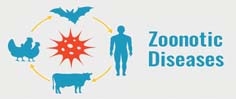
Zoonotic diseases, commonly referred to as zoonoses, are infectious diseases that are naturally transmitted between animals and humans. They are caused by diverse groups of pathogens including bacteria, viruses, parasites, and fungi.
These diseases have existed throughout history, but their importance has increased dramatically in recent decades due to ecological, environmental, and socio-economic changes.
The close association between humans and animals in agriculture, pet ownership, wildlife interaction, and food systems creates continuous opportunities for pathogen transmission. Zoonotic diseases are not only a medical concern but also a veterinary, environmental, and socio-economic issue.
Historical Perspective
Historically, many major human diseases such as plague, influenza, and tuberculosis have zoonotic origins. The domestication of animals marked the beginning of sustained human exposure to animal pathogens. Over time, pathogens adapted to human hosts, leading to widespread outbreaks. In modern times, emerging diseases such as SARS, Ebola, and COVID-19 have highlighted the continued threat of zoonotic spillover events.
Epidemiology and Risk Factors
Approximately 60% of all known infectious diseases and up to 75% of emerging diseases are zoonotic. Risk factors include deforestation, urban expansion, climate change, globalization, wildlife trade, and intensive farming. Climate change alters the distribution of vectors such as mosquitoes and ticks, increasing the geographical spread of diseases. Population growth and migration further enhance disease transmission dynamics.
Pathogenesis
The pathogenesis of zoonotic diseases varies depending on the causative agent. Viruses often invade host cells and replicate rapidly, while bacteria may produce toxins that damage tissues. Parasites may have complex life cycles involving intermediate hosts. The interaction between pathogen virulence and host immune response determines disease severity.
Transmission Dynamics
Zoonotic pathogens are transmitted through direct contact, ingestion, inhalation, or vectors. Direct transmission occurs through bites, scratches, or handling infected animals. Indirect transmission occurs via contaminated food, water, or fomites.
Vector-borne transmission involves arthropods such as mosquitoes, ticks, and fleas. Airborne transmission occurs through aerosols and droplets, particularly in enclosed environments.
Major Zoonotic Diseases
Rabies is a fatal viral disease transmitted through animal bites, primarily dogs. Brucellosis affects livestock and humans, causing chronic illness and reproductive losses. Leptospi- rosis is associated with contaminated water and is common in tropical regions. Avian influenza originates in birds and poses a pandemic threat. Tuberculosis caused by Mycobacterium bovis affects both animals and humans.
Diagnosis and Laboratory Methods
Diagnosis of zoonotic diseases involves clinical examination, laboratory testing, and epidemiological investigation. Common diagnostic methods include serology, culture techniques, PCR, and molecular diagnostics. Rapid and accurate diagnosis is essential for effective control and prevention.
Public Health Impact
Zoonotic diseases impose a significant burden on global health systems. They lead to morbidity, mortality, reduced workforce productivity, and increased health- care costs. In developing countries, the impact is more severe due to limited healthcare infrastructure.
Economic Impact
The economic consequences include loss of livestock productivity, trade restrictions, and costs associated with disease control measures. Outbreaks can disrupt food supply chains and affect national economies.
Veterinary Role
Veterinarians play a crucial role in surveillance, diagnosis, vaccination, and control of zoonotic diseases. They act as a bridge between animal and human health sectors and are essential in implementing One Health strategies.
Prevention and Control
Prevention includes vaccination programs, biose- curity measures, sanitation, proper food handling, and vector control. Public awareness and education are critical components of prevention strategies.
One Health Approach
The One Health approach integrates human, animal, and environmental health disciplines. It promotes collaboration across sectors to address complex health challenges and prevent future outbreaks.
Future Challenges
Emerging zoonotic diseases continue to pose threats due to environmental changes, antimicrobial resistance, and global travel. Strengthening surveillance systems and international cooperation is essential.
Conclusion
Zoonotic diseases are a major global concern requiring multidisciplinary efforts. Improved veterinary services, public awareness, and integrated approaches are essential to reduce their impact.
References
1. WHO – https://www.who.int/news-room/fact-sheets/detail/zoonoses
2. CDC – https://www.cdc.gov/onehealth/basics/zoonotic-diseases.html
3. FAO – https://www.fao.org/one-health/en/
4. ScienceDirect – https://www.sciencedirect.com/topics/agricultural-and-biological-sciences/zoonoses
5. ResearchGate – https://www.researchgate.net/publication/349990389
Leivon Jasmine Kom is a 3rd Year BVSc student of College of Veterinary Science and Animal Husbandry, Selesih, Aizawl, Mizoram