May 7, 2026: Border villages Wanglee, Namlee and Z Choro attacked by Myanmar based Kuki National Army-Burma (KNA-B) Committee on demographic changes to submit report within a year
|


By Our Staff Reporter
IMPHAL, May 27: The High-Level Committee on Demographic Changes (HLCDC) formed under the Ministry of Home Affairs on May 26 has been given a period of one year to submit its final report.
The committee, which will investigate and study demographic changes across the country, has been tasked to recommend a well-organised and a permanent operational system for legal, fair and time bound identification, detention, and depor- tation of illegal immigrants already residing in the country.
The formation of the High-Level Committee on Demographic Changes (HLCDC) was announced by Union Home Minister Amit Shah and a Gazette notification was published yesterday.
Significantly, this came amid heightened tension in Manipur which has been linked to unchecked and uncontrolled illegal immigration from Myanmar across a 352-kilometre long porous border.
Embroiled in a violent conflict since May 3, 2023, Manipur has seen some of the most violent clashes involving armed militants, and faced external aggression.
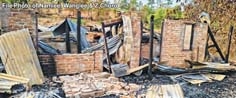
On May 7, 2026, three border villages in Kamjong district, Wanglee, Namlee and Z Choro were simultaneously attacked by Myanmar based Kuki National Army-Burma (KNA- B) and the People's Democratic Force (PDF). People were fired upon and a woman was abducted by the militants in the attack that left dozens of houses charred and reduced to ashes. The abducted woman was later released and rescued by security forces.
The Gazette notification published yesterday said the High-Level Committee on Demographic Changes (HLCDC) will be headed by Retired Justice Prakash Prabhakar Naolekar as the Chairman and Joint Secretary (Foreigners-I), MHA as Member Secretary.
The committee has four members--Census Commissioner; Durga Shankar Mishra (Retired IAS); Balaji Srivastava (Retired IPS) and Dr Shamika Ravi.
Extensive challenges have arisen from demographic changes, including due to illegal immigration. Demographic changes have been observed in certain regions of the country which are not attributable to normal fertility or mortality trends but are instead emerging due to external abnormal factors such as illegal immigration, irregular population mobility, and administrative laxity, said the Government.
Notably, past census exercises conducted in Manipur had recorded unnatural and abnormal population growth and sharp rises in the number of villages in many hill regions, raising serious concern and suspicion about massive influx of illegal immigrants.
In the Gazette notification, the Government said, although the demographic changes are most visibly concentrated in the border districts, their impact has extended beyond those areas, now affecting urban centres, industrial corridors, tribal regions, and other socially and economically sensitive areas, thereby severely impacting public service delivery, local governance, resource distri- bution, and social cohesion.
The existing institutional framework has not been adequately equipped to under- take coordinated, evidence-based, and time-bound eva- luation and response to such demographic shifts, it said.
The High-Level Committee on Demographic Chan- ges (HLCDC) under the Ministry of Home Affairs will undertake scientific study of the nature, causes and consequences of such demographic changes occurring across the country and it will recommend appropriate policy, administrative and legal measures, said the Government.
The committee has also been authorised to nominate other experts/agencies as needed and consult with various stakeholders including local Governments, security agencies, social organizations, and academic institutions.
The terms of reference of the HLCDC
i) To undertake an extensive consideration of the challenges arising from demographic changes, inclu- ding due to illegal immigration.
ii) To study the possible causes of such demographic changes, such as variations in fertility, cross-border movement (including illegal immigration), economic opportunities, and other socio-environmental factors.
iii) To identify the underlying factors behind these changes, including illegal immigration, abnormal settlement patterns, and planned migration.
iv) To analyse structural population changes at the level of religious or social communities, especially those diverging from uniform trends.
v) To recommend a well-organized and permanent operational system for the legal, fair and time bound identification, detention, and deportation of illegal immigrants already residing in the country.
vi) To recommend an appropriate institutional mechanism to strengthen border management, population stabilization, and identification systems for sustained monitoring of such trends.
vii) To propose a comprehensive policy framework to enhance coordination between Central and State Governments in matters related to illegal immigration and resultant demographic imbalance.
viii) The Committee may recommend any other measure it deems appropriate to address the challenges arising from demographic changes, including due to illegal immigration.
The committee shall have the authority to requisition any information, records, or documents necessary for its work from any Ministry, Department, State Government, public authority or individual, said the Government.
The committee, with the prior approval of the Ministry of Home Affairs, may constitute sub-committees and/or working groups to undertake any inquiry, consultation or analysis.
The headquarters of the committee shall be located in New Delhi, and it shall submit its final report within a period of one year, said the Government.