World Blood Donation Day and status of voluntary blood donation
|


Dr A Barindra Sharma
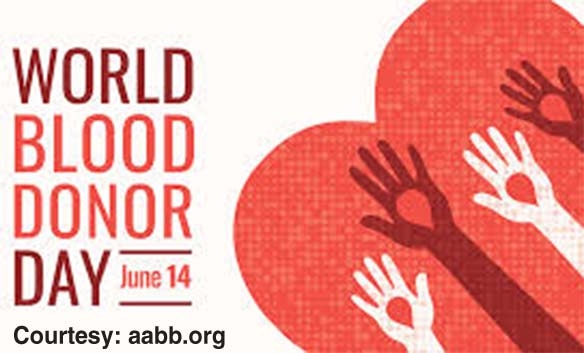
World Blood Donor Day is observed on June 14 every year to commemorate the birth anniversary of Karl Landsteiner, a Nobel laureate, who discovered the ABO blood group system. The aim is to raise global awareness of the need for safe blood for transfusion and to pay global tribute to the millions of voluntary blood donors who have contributed to health care system everywhere.
The theme for 2026 World Blood Donor day is “ONE DROP OF HUMANITY. GIVE BLOOD .SAVE LIVES”. The message highlights that each donation is not a simple medical act =; the whole of humanity can be reflected in a single drop and how every donor helps form a lifeline that connects and protects us all.
Why should we donate blood ? Safe blood and blood products are critical in modern health care systems. Every second there is someone who requires blood. In India the voluntary blood donation is approx. 70% as compared to 100% target set by WHO. There is no substitute for blood as it can neither be manufactured nor available as a drug. It can’t be used from other animals too. The only source is from human beings. The demand is ever increasing because of accidents or complicated surgeries or childbirth or natural disasters.
Many patients of cancer, kidney failure, blood disorders etc. also require repeated blood transfusions. Blood donation is harmless : The blood volume in male is 76ml/kg body wt and in female 66ml/kg body wt. Body requires about 50ml/kg body wt for all normal physiological functions, the rest is surplus. We are donating a fraction from this surplus volume. No extra diet is required after donation. Any individual of 18-65 years with Hb 12.5%, body weight 45kg, normal BP & Pulse can donate blood every 3 months (male) and every 4 months(female).
Benefits of Blood Donation: Medical science says
1. Regular blood donation decreases the excess amount of iron which is very toxic in the body thereby reducing the risks of heart and liver diseases particularly in males.
2. The excess of cholesterol associated with the risk of heart disease and high BP is also cut down with regular blood donation
3. Blood donation allows synthesis of new blood physiologically which is functionally more efficient, besides improving the body ‘s immunity.
4. Blood donation also burns calories and helps in body weight control.
5. Blood donation also improves the mental status and morality. It imparts the sense of self satisfaction that your blood will save 3 lives.
6. Every donated blood is tested for blood group and TTI (HIV, HBV, HCV, Syphilis & malaria) free of cost in addition to physical medical check-up. A donor card is also issued.
Status in Manipur
Voluntary blood donation is low in Manipur (< 50%) as compared to other States and the National average of approximately 70%. The main reason is lack of awareness among the general public. However, there is increasing trend in awareness and VBD in the last 5-6 years. The major burden of blood supply in the State is borne by RIMS.
Some suggestions for increasing voluntary blood donation
1. Inclusion of voluntary blood donation in school syllabus to generate awareness at the fundamental level for the future eligible donors.
2. Incentives to voluntary blood donors in the form of preference in academic admission and hostel accommo- dation, free parking, free bus travel, etc.
3. Awareness through media and news channels by emphasizing the importance of blood donation.
4. Involvement of public leaders and celebrities in the awareness campaigns to show as role models.
5. Incentives and financial assistance to Voluntary Blood Donor Groups for awareness and motivation at the community level.
6. Recognition of regular Voluntary Blood Donors as heroes.
To conclude, it is worthwhile to say that the safest blood comes from regular voluntary blood donor. Your involvement and support will help to ensure availability of safe blood for the needy patients Let’s remember: “Tears of a Mother cannot save her child. But your Blood can.” “A few drops of your Blood can help a life to bloom”
The writer is Professor of Transfusion Medicine, RIMS, Imphal