Mosquitoes returning in March : Humidity, rainfall and public health in Manipur
|


Dr L Bina Chanu
As winter recedes and March ushers in the first whispers of spring, the air begins to change. Temperatures rise and humidity thickens, and with this subtle shift comes an unwelcome visitor: the mosquito. These tiny insects, often dismissed as mere irritants, are in fact powerful indicators of environmental change and public health risk. Their resurgence in March is not accidental, it is a biological response to climate, water, and human activity.
Understanding this seasonal cycle is crucial for communities preparing to face the challenges of vector-borne diseases.
Manipur’s climate in March is marked by scattered rainfall events and steadily increasing humidity. These conditions are deceptively mild compared to the heavy monsoon rains of June and July, yet they are sufficient to trigger mosquito breeding. Even light showers create puddles in fields, clogged drains, and household containers. Rising humidity ensures that these water bodies remain viable for mosquito eggs and larvae.
March is often overlooked as a “minor” season for mosquitoes, but in reality, it is the month when populations begin to multiply. By the time the monsoon arrives, the groundwork for outbreaks has already been laid. This period is often overlooked, yet it is precisely when preventive action is most effective. By recognizing this particular month as the “wake-up call” month, communities can prepare before the mosquito population explodes.
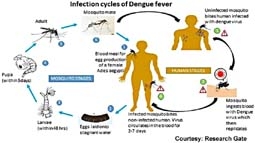
Mosquitoes depend on water to complete their life cycle. If there is no enough water, they can retain in their larval stages for long period of time. Rainfall provides their breeding sites, while humidity accelerates development and sustains adult activity. Some of unique feature of stages of mosquitoes are -
Egg survival : Moist conditions prevent eggs from drying out, ensuring higher hatch rates. Larval growth: Warm, humid air shortens the time larvae need to mature into adults.
Adult activity: Female mosquitoes, responsible for biting, thrive in humid air, increasing feeding frequency.
In an environment, where there are abundant rainfall and high humidity, the cycle accelerates dramatically as eggs hatch within 24–48 hours, Larvae develop in 2–3 days and pupae transform into adults in 1–2 days. The entire process, from egg to biting adult, can be completed in just 7–10 days. This rapid turnover explains why mosquito populations explode after heavy rains.
In Manipur, rainfall in March, though intermittent, creates scattered breeding grounds across valleys and rice paddies. Humidity levels rising above 70–90% further amplify mosquito activity. The result is a “mosquito burst,” a sudden increase in population that coincides with the early rains. The return of mosquitoes in March is not just an ecological event; it is a public health concern. Mosqui- toes are vectors for Malaria, Dengue, Chikungunya, and Japanese Encephalitis. Early rainfall and humidity-driven bursts of mosquito activity increase the risk of transmission well before the monsoon.
Malaria: Sporadic cases often appear in March, escalating as rains intensify. Dengue: Early breeding sites sustain transmission cycles, leading to outbreaks by summer.
By recognizing the month as the starting point of mosquito season, health authorities can launch preventive campaigns earlier, reducing the burden of disease later in the year. In Manipur, March humidity is particularly significant. The region’s geography-low-lying valleys, rice paddies, and waterlogged fields creates natural breeding grounds. Cultural practices, such as storing water for household use, inadvertently add to the problem.
Communities often prepare for festivals in spring, yet mosquito control rarely features in these preparations. Integrating awareness campaigns into cultural events could be transformative. We can imagine a spring festival where alongside traditional rituals, households commit to cleaning drains and covering water tanks. Such integration respects heritage while addressing modern health challenges. And, the fight against mosquitoes should begin at three levels:
Household level
• Covering water tanks and buckets.
• Changing flowerpot water regularly.
• Using repellents and mosquito nets.
Community level
• Organizing clean-up drives to remove stagnant water by local clubs
• Conducting fogging in high-risk areas by district Health Centres
• Maintaining drainage systems to prevent waterlogging.
Personal level
• Wearing protective clothing, especially in the evening.
• Avoiding outdoor exposure during peak biting hours.
• Educating children about mosquito risks.
March is the month to act. Small steps taken now can prevent large-scale outbreaks later. Mosquitoes are like uninvited guests who arrive before the party begins. They slip in quietly, unnoticed, yet their presence foreshadows chaos. This metaphor captures the urgency of early prevention.
The correlation between rainfall, humidity, and mosquito bursts during the month is also part of a larger narrative i.e. climate change. Rising global temperatures and shifting rainfall patterns extend mosquito seasons and expand their habitats. Regions once too cold for malaria now face outbreaks. Humidity, once seasonal, becomes perennial.In Manipur, irregular rainfall patterns of short bursts followed by humid days, are becoming more common. This irregularity in climatic condition sustains mosquito popu-lations year-round, making early prevention even more critical. Studying March mosquitoes provides insights into how climate change reshapes disease landscapes.
The return of mosquitoes in in early months should not trigger panic but preparation.
Awareness, vigilance, and collective action could be the keys. By treating March as the “first line of defense,” households and communities can reduce disease risks significantly. Public health campaigns must emphasize that prevention is cheaper and easier than treatment. A covered water tank today is worth more than a hospital bed tomorrow.
The message is simply- Act Early, Act Together.
Mosquitoes returning in March in Manipur are more than seasonal pests as they are signals of environmental change, biological adaptation, and public health risk. Rising humidity and rainfall are their allies, but they can also be ours if we recognize their role as warnings.
By correlating climate, biology, and community action, we can transform March from a month of vulnerability into a month of resilience.
The story of mosquitoes is ultimately the story of human preparedness. As humidity rises and rainfall returns, so must our vigilance. March is not just the season of renewal—it is the Season of Responsibility.
The writer is Assistant Professor Dept of Zoology, Manipur University, Can-chipur – 795003, Manipur and can be reached at [email protected]