Biometrics of Myanmar refugees recorded at Kamjong
|


By Our Staff Reporter
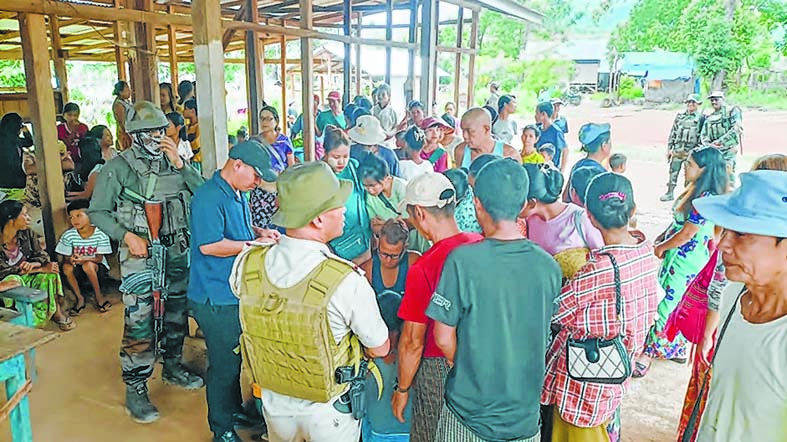
IMPHAL, Jun 30: Kamjong district administration recorded biometrics of around 500 Myanmar Nationals seeking refuge in temporary shelters located across three locations, Phaikoh, Shangkhalok and Aloyo villages today.
Manipur shares a 398-kilometre long border with Myanmar, and influx of Nationals from the neighbouring country has been a flashpoint of the ongoing violent conflict in Manipur.
Notably, this verification exercise in Kamjong came nearly two months after Myanmar based militant groups attacked and burnt three villages, Z Choro, Namlee, and Wanglee in the border area.
The attack on the three border villages on May 7 occurred despite the presence of Indian security forces, particularly the Assam Rifles which is serving as a border guarding force in Manipur.
In a statement, the IGAR(South) said the exercise today was carried out by the district administration in close coordination with the Assam Rifles, Police and Medical Department of Kamjong district.
Displaced Myanmar Nationals fleeing ongoing armed conflict in the country have been taking shelter in Phaikoh, Shangkhalok and Aloyo villages in Kamjong district.
The operation to record the biometrics of the Myan-mar refugees was conducted under the directives of the district administration.
A joint team consisting of 40 civil officials and security personnel verified identities, enrolled biometric data and documented demographic profiles. The exercise successfully covered approximately 500 individuals across the three target locations, establishing an authenticated, centralized database for administrative planning and security tracking, said the Assam Rifles.
The verification drive constitutes Phase II of Operation Anchor, a structured civil-military initiative designed to balance National security imperatives with regulated humanitarian oversight along the sensitive Indo-Myanmar Border (IMB), said the Assam Rifles.
The current initiative builds directly upon the operational achievements of Phase I, which focused strictly on securing the physical border through enhanced electronic surveillance, intensified patrolling and targeted fencing to curb illegal cross-border movement and unregulated infiltration, added the AR.
"By transitioning into Phase II, the operational focus expands from border denial to inner-corridor accountability, ensuring that individuals permitted temporary refuge are thoroughly monitored. The creation of this secure biometrics database eliminates anonymity, aids the civil administration in streamlining essential medical and humanitarian relief transparently and provides the Union and State Governments with reliable records to make informed policy decisions regarding border governance and internal security," said the Assam Rifles.