Sajibu Cheiraoba: One occasion, two narratives
|


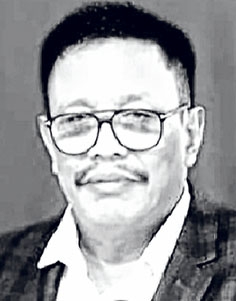 Hareshwar Goshwami (Writer and Politician)
Sajibu (Sachiphoi), the month, is sometimes referred to as Chinpi. Though there are differing views, it is generally regarded as the start of the new year in Manipur. The month of Sajibu is described as the month in which the growth of living things and non-living things began in the ancient Manipuri scripture Tharoni (Ibochouba, N. 1982). In the month of Sajibu, even a deer's shattered horn might give rise to new life. The phrase Sajibu Cheiraoba, which is presently used to refer to the Manipuri Meitei new year, is thus derived from the names of the Manipuri months Sajibu (March/April) and Cheiraoba (Chei=stick, laoba= announce). Today, the people of Manipur, particularly the Meiteis, celebrate Cheiraoba on two occasions: once on Sajibu Nongma Panba (the first day of Sajibu), according to the traditional lunar calendar, and once in the same month Sajibu, which typically falls on April 13 or 14 according to the movement of the sun. Most adherents or believers of the indigenous Meitei religion known as Sanamahi Laining observe Cheiraoba on Sajibu Nongma Panba (the first day of the month of Sajibu). On the other side, Meitei Hindus mark the beginning of the Sajibu month with the celebration of Sajibu Cheiraoba on April 13 or 14. The current story tries to concentrate on the two Cheiraobas' foundation as practiced by the Meitei/Meetei.
Manipur, a long-established country, had long possessed all the traits of a kingdom. In the first century AD, Nongda Lairen Pakhangba, the monarch of Manipur, unified the country. All of the Saptangas or Sapta Angas (seven attributes) of a kingdom as described by Kautilya (Chanakya) in his Arthashastra were present in his kingdom. The realm had sophisticated knowledge in several subjects, including astronomy and astrology, as it was a well-established kingdom. In this regard, the ancient Manipuri works Nongdon Langbum, Thawanmichak Khenjanglon, Tha Khenjanglon, Tharon, Tharol Nongkhairol, Sandhonglon, and Lai Khundin Lalup may be mentioned. The ancient Manipuris were also aware of the existence of the twenty-seven lunar mansions known as Nakshatra (Thawanmichak) in Vedanga Jyotisha, such as Shajik (Arietis), Thaba (Musca), Thayai (Sagittari), Thaton (Sagittari), Shachung Telheiba (Orionis), and Likla Saphaba. The zodiac (Greek: zodiakas) signs, which are thought to have been created by the Babylonians, were known to Meiteis as well. Here, mention may be made of Hameng, Tanba, Saphu, Waikhu, Nongsha, Nura, Pabot Chang, Tillaikhumbi, Liriten, Chinglai, Fishing Pul, and Nga Pareng. (Khelchandra, Ariba Manipuri Sahityagi Itihas,1992: 219–220).
Khongjomnupi Nongarolii and Poreiton Khunthokpa are two more ancient archaic writings that, from very early on, depict the concept of the season and seasonal changes. We learn that the ancient Meiteis were able to recognise distinct constellations and give them different names. They were aware that certain constellations were visible at specific times of the year while others were not. Also, they noticed some constellations rising at sunset on a specific day or month and discover them rising again at the exact same time the following sidereal year. The reference below can be used to determine their understanding of the seasons and seasonal changes.“Pari Chekla-lonthok panangpu… .yingathanamamei huitharak payingel thakimachil phaorakpata khoi-manarolnung, haonay itolthakkta wangpal pangna yengna tiyingakum chellaokhatlak u. Napaleisungkor o tharup nanpati yingel kumkhaipa putamtharakke”. (Narendra, Khongchomnupi Nongkarol,1995:38). The text alludes to the cicadas singing and the Pleiades (Khongjomnubi) arrival with the change of seasons. The ancient Manipuri literature Poireiton Khunthokpa also reflects the Meiteis’ understanding of heavenly bodies. Related text in the document is as follows: “Touyikitita ipangpalamalei yehaira patinayimtai bangpanti karipan banopao hanglapa tahoita Leinung Thongarel Ahanpa woayimtaibang pantinumit-palye, thapalye, thayai- thatonpalye. Sachik Thaba Thawanmichak Khong-chompipalye.” (Chandra Poireiton Khunthok, 1995:4). The story illustrates the Meiteis’ knowledge of heavenly stars besides the Sun and Moon, including Arietis (Shajik), Musca (Thaba), Saggitari (Thayai), Sagittari (Thaton), Pleiades (Khongjomnupi), etc.
Sajibu Nongma Panba Cheiraoba
Sajibu Nongma Panba Cheiraoba is said to have started during or even before the reign of Nongda Lairen Pakhangba. (Chandrashekhar, Enatki Harao Kummei,1992:39). Cheiraoba is a collection of religious rites, including Singthekpa/Singthaba (assessment of sticks), and Shingshatpa (abstraction of sticks),Kongba Leithong Phatpa Sajibu Leikhun Phunba etc. On the first Saturday of Lamta/Lamda (March/April) preceding Cheiraoba, the Lais (assumed to be Gods) would typically perform Shingthekpa or Shingthaba at Heibok/Heipok Hill to predict how many people might pass away in the realm that year. Sticks were used in the Assembly of Lais (Gods) to tally the number of those who would perish, one stick for each individual. The royal priest performed a rite known as Shingshatpa to shield the royal family from demise, illness, and disaster in order to avoid such enrollment. One day before Cheiraoba, the ceremony was typically carried out at night at Heipok Hill. A ritual known as Kongba Leithong Phatpa Shajibu Leikhun Phunba was also performed at the home of Angompokpa Kuptreng and Ningthempokpa Sentreng on the seventh day following Cheiraoba. This holy site is located some four kilometers to the east of Imphal Kangla between the Kongba River and the Iril River. It is a rite carried out as part of the Cheiraoba to track favorable and unfavorable omens for the Nation's future (Birachandra N., Primal Religion: Change and Continuity, 2013: 92).
From its inception, the approach to Cheiraoba has seen some deviations according to the changing times. The Kongba Leithong Phatpa and Sajibu Leikhun Phunba ceremony were carried out at Kangla before the accession of Nongda Lairen Pakhangba. But, the location of the ritual was changed to Kongba with the arrival of Nongda Lairen Pakhangba. (Ibomcha, Kum Houba, 1986:8). It is also claimed that at the beginning of each year, under the reign of Nongda Lairen Pakhangba, offerings of seasonal fruits, vegetables, rice, and other foods were presented to Lainingthou Sidaba for the benefit of the populace and the prosperity of the kingdom. During the reign of Meidingu Naophangba (428-518 AD) in the year 439 AD, this design was altered. A day before the new year began, Pakhanglakpas in charge of the bachelors, some say Panalakpas in charge of Panas (present day district) received instructions to announce the start of the new year in their respective areas and villages with a bamboo stick, typically a Khokwa (bambusa vulgaris), with a flag and a bell on top. Selected members of the four Panas, which were akin to modern districts, were tasked with bearing responsibility for any misfortune that might befall the kingdom. The new year became known as Cheiraoba (Chei =stick, laoba=announce) as a result of this event. This was done in addition to what Nongda Lairen Pakhangba had already accomplished.
A further significant alteration to the Cheiroaba pattern occurred in the 1474 AD, under Meidingu Kiyamba (1467-1508). The tradition of ringing in the new year with a bamboo stick, a flag, and a bell was abandoned in favour of a new technique called Cheithaba, which is made up of the terms Chei (stick) and Thaba (count, some say abandon). Some translate it as Chahi=year and Thaba=count, i.e., the year's counting. The event is connected to the year-counting process in both situations. Cheithaba might be seen as a year-counting method. With the new method, one individual rather than four as in the previous system was chosen to act as the Ushin (substitute) on behalf of the monarch and the realm. He pledged to assume responsibility for all potential risks to the king and the kingdom. He earned the name Cheithaba. Cheithaba was engaged for a year and was not required to do any official tasks.
(To be contd)