Auteur theory and MA Singh : Tracing the personal stamp in Manipuri cinema
|


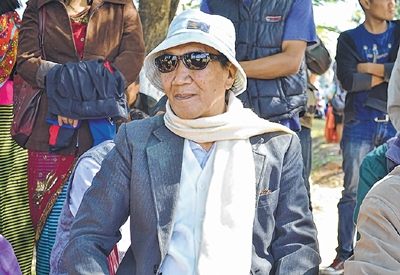
Herojit Nongmaithem
“On the birth anniversary of the late filmmaker MA Singh on October 18, 2025, Herojit Nongmaithem writes that the provided article identifies MA Singh as a director with a distinct authorial voice, or “auteur”. A tribute to the filmmaker could focus on this aspect, celebrating his personal vision and how he imprinted it on his films, aligning his approach with cinematic principles articulated by critics such as Astruc and Bazin. The article further outlines key themes in his work, such as the fragility of innocence, the plight of the marginalized, and the struggle for dignity and survival. By celebrating his technical competence, consistent style marked by social realism, and deep empathy, the tribute can honor M.A. Singh as an auteur whose work enriched Manipuri cinema and Indian Parallel Cinema.”
The concept of the auteur, as articulated by theorists like André Bazin, Alexander Astruc, and most notably defined and popularized by Andrew Sarris, posits that a film director’s body of work reveals a distinctive personal vision - a signature style and recurring thematic preoccupations that mark them as the “author” of their films. Auteurs infuse films with their “singular perspectives and trademark visual styles” when translating them from screenplays to the screen. The question of how far this theory lingers on the work of MA Singh and his films, particularly Sanakeithel, provides a fascinating lens through which to examine his contribution to Indian Parallel Cinema and the broader landscape of auteurism.
Sarris’s three premises and MA Singh’s oeuvre
Andrew Sarris proposed three premises for identifying an auteur
Technical Competence: The director’s mastery of the craft of filmmaking.
Signature Style: The distinguishable personality of the director, evident through recurrent stylistic traits across their films.
Interior Meaning: The ultimate glory of cinema as an art, extrapolated from the tension between the director’s personality and their material, revealing a deeper semantic and aesthetic interiority.
According to Central University of Kerala, these premises can arguably assert the status of a director as an Auteur. Sanakeithel offers compelling evidence that these Sarrisian premises linger significantly on MA Singh’s directorial vision
Technical competence
MA Singh’s Sanakeithel, produced under the often challenging conditions of regional independent cinema, showcases a clear command of cinematic technique. The film’s nuanced cinematography, the effective use of non-professional actors, and the tender sincerity in handling human relationships point to a director who understands the craft. The Indian Express recognized Singh’s considerable cinematic promise in 1984. The film achieves a powerful emotional impact through its visual storytelling. demonstrating Singh’s ability to orchestrate the various elements of filmmaking to serve his artistic vision.
Signature style
Based on Sanakeithel, a distinctive signature style can be attributed to MA Singh.
Commitment to Social Realism: M.A. Singh’s unwavering focus on depicting the unvarnished realities of Manipur’s society, particularly the struggles of marginalized individuals and the impacts of social injustice, is a recurring thematic and stylistic trait. This aligns with the ethos of Parallel Cinema and its rejection of mainstream escapism.
Emphasis on Local Context and Regional Narratives: MA Singh consistently grounds his stories in the specific cultural and socio-political landscape of Manipur. He utilizes local settings, local talent (including non-professional actors), and local dialects to lend authenticity and depth to his narratives, enriching the tapestry of Indian cinema with a distinct Manipuri voice.
Empathy and Humanism in Character Portrayals : MA Singh’s films showcase a deep empathy for his characters, even amidst bleak circumstances. The tenderness and sincerity with which he portrays human relationships, as evidenced in Sanakeithel’s exploration of Nungshi’s trauma and Mobi’s resilience, point to a humanist perspective that permeates his storytelling.
Restrained Visual Language: While Sanakeithel is visually impactful, it avoids overt stylistic flourishes. The visual language favors a naturalistic, observational approach, allowing the raw emotions and the authentic settings to speak for themselves. This stylistic choice is integral to his realist aesthetic.
Interior meaning
The “interior meaning” of MA Singh’s work, extrapolated from the tension between his personal vision and the raw material of his subjects, seems to revolve around:
The Fragility of Innocence: A recurring preoccupation with how innocence is shattered by societal forces beyond individual control, often manifesting through the suffering of women and children.
The Unheard Cries of the Marginalized: A profound concern for giving voice to those who are exploited, silenced, or forgotten by the mainstream. His films function as a platform for social commentary and advocacy, inviting viewers to engage with uncomfortable truths.
The Struggle for Dignity and Survival: Even amidst despair, his films celebrate the enduring human spirit-the resilience, the determination to survive, and the desperate yearning for love and connection, even in the most challenging environments. Mobi’s journey in Sanakeithel perfectly encapsulates this.
Critique of State and Societal Apathy : Underlying his narratives is a subtle yet powerful critique of systems that fail to protect the vulnerable, allowing exploitation and injustice to persist.
Connecting with Astruc and Bazin
While MA Singh’s work might not feature the overt stylistic experimentation associated with some filmmakers inspired by Astruc’s caméra-stylo concept (where the camera is used as flexibly as a writer’s pen), his approach aligns with the core idea of the director imprinting a personal vision onto the film. His decision to foreground local narratives and use a realist visual language to articulate profound socio-cultural themes demonstrates a distinct authorial voice.
André Bazin, a key figure in the development of auteur theory, emphasized realism and the director’s ability to capture the ambiguity of reality through techniques like deep focus. MA Singh’s films, with their grounded realism and focus on authentic portrayal, share a kinship with Bazin’s emphasis on capturing the “stuff” of the world.
Conclusion: An auteur in the Manipuri context
While the term “auteur” carries a specific historical baggage, rooted in French film criticism’s engagement with Hollywood and European art cinema, the principles articulated by Bazin, Astruc, and Sarris undoubtedly resonate when examining MA Singh’s work. His technical competence, coupled with a consistent and recognizable style marked by social realism, deep empathy, a focus on regional narratives, and an exploration of despair and resilience strongly suggest the presence of a distinct authorial voice. MA Singh, through films like Sanakeithel, stands as an auteur whose personal vision has left an indelible mark on Manipuri cinema, enriching the broader landscape of Indian Parallel Cinema and offering profound insights into the human condition from a unique regional perspective.