Stamps, the eternal educators
|


S Balakrishnan
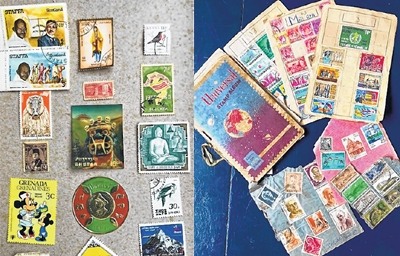
Stamps are the secret mantra for my active life after retirement (Whether I was active in the office is another moot point). I never thought postal stamps could keep me so much engaged and also teach me so much. Each stamp has a story to tell only if we take the effort to look into the details (of course, with the help of Internet, assisted by AI). As I started sorting out my small philatelic collection I was amazed at the variety of stories that emerged out of it –the fall of monarchies and consequently the fleeing monarchs, and the rise of democracy; the coinage, geography, countries integrating (South & North Vietnam) & disintegrating (Yugoslavia, USSR, etc.), new countries emerging from colonisation (India is a good example), thus changing the world political map,arts & crafts, flora & fauna, etc. These political changes happened either peacefully (USSR) or after violent struggle (Vietnam).
My interest in philately was caused by the small collection of a few British India and early independent Indian stamps collected by my father. The hobby grew by exchanging and buying stamps from my classmates. We boys were more particular about number of stamps rather than the content. The competition was so intense that we had quarrelled and stopped talking to each other over such petty exchange deals. My two elder sisters were not keen about this. First I nagged my parents and got a stamp album which got filled up fast; next it was a made-to-order album of colourful paper sheets. I also collected stamps from the old letter hooks found in my maternal grandparents’ house. It provided rare postal items of British era as well as of 1950s. It was all a mad collection, without reason or rhyme; only now, as I sort them out and understand the background of each stamp, I realise their value. After retirement in 2016, the collection almost ceased. So I thought it was high time I organised the collection; finally, I managed to organise it to some extent a few months back only.
My father added to my collection by bringing used stamps from his office mail. Later, as I worked in a Central Govt. office (Press Information Bureau - PIB), there was not much scope for collecting postal stamps because ‘On India Government Service’ postage stamp was used, as mandated. But working in PIB had another advantage; Postal Department’s “On Postal Service” stationery was another huge collection while working in PIB Chennai. Also, when Registrar for Newspapers of India (RNI) office merged with PIB, the correspondence from newspaper offices added to my philatelic collection. My son & daughter also developed interest and they participated in a few exhibitions and won. They owned the collection until their college days, buying and exchanging stamps. Having retired, the task of organising it finally fell on my weak & tired shoulders.
It was a great challenge to sort out the collection, though of a humble size; after much perseverance and patience I managed to group them as Indian stamps and Indian postal stationery; this again was separated as display sheets (as used in exhibitions) and loose stamps classified in separate pouches. The other major set is foreign stamps, classified country-wise and put in separate pouches. I had also prepared a list that helps easy identification of stamps. Now the shamble is in order, at last. Thanks to Google Lens which helped identify many stamps. Humble though, the collection sprang many surprises like rare stamps from the German Kingdom, Italian Kingdom, Refugee Relief Stamp issued by India during Bangladesh liberation, 1st Definitive Series Stamps issued in 1949, and the like. The foreign stamps provided new perspective in many fields, especially in world history which I lacked. Hence I found them very interesting.
Stamp collection was once a rage; it is hailed as the King of Hobbies. With the habit of writing letters fading due to SMS, e-mail, social media, WhatsApp, Courier and such modern communication facilities, stamp collection has almost disappeared from the scene. It is unfortunate that the art of writing warm personal letters has almost vanished. Recently, when my friend’s daughter got married, I presented her the original letter written in 1986 by her father (my friend) to me intimating her birth. She was so excited about the 40-year-old letter and declared it as the best wedding present. As I dig out information about each and every stamp and write articles under the “Stamp Stories” series, I do realise that stamp collection is both an engaging and highly educating hobby.
Tail piece : In the USA, between 1913 and 1920, children were sent through ‘postal parcel’ between two stations, the postal charge being cheaper than the train ticket ! Even eggs, live birds and small animals were sent in postal parcel service.
Stamps are the secret mantra for my active life after retirement (Whether I was active in the office is another moot point). I never thought postal stamps could keep me so much engaged and also teach me so much. Each stamp has a story to tell only if we take the effort to look into the details (of course, with the help of Internet, assisted by AI). As I started sorting out my small philatelic collection I was amazed at the variety of stories that emerged out of it –the fall of monarchies and consequently the fleeing monarchs, and the rise of democracy; the coinage, geography, countries integrating (South & North Vietnam) & disintegrating (Yugoslavia, USSR, etc.), new countries emerging from colonisation (India is a good example), thus changing the world political map,arts & crafts, flora & fauna, etc. These political changes happened either peacefully (USSR) or after violent struggle (Vietnam).
My interest in philately was caused by the small collection of a few British India and early independent Indian stamps collected by my father. The hobby grew by exchanging and buying stamps from my classmates. We boys were more particular about number of stamps rather than the content. The competition was so intense that we had quarrelled and stopped talking to each other over such petty exchange deals. My two elder sisters were not keen about this. First I nagged my parents and got a stamp album which got filled up fast; next it was a made-to-order album of colourful paper sheets. I also collected stamps from the old letter hooks found in my maternal grandparents’ house. It provided rare postal items of British era as well as of 1950s. It was all a mad collection, without reason or rhyme; only now, as I sort them out and understand the background of each stamp, I realise their value. After retirement in 2016, the collection almost ceased. So I thought it was high time I organised the collection; finally, I managed to organise it to some extent a few months back only.
My father added to my collection by bringing used stamps from his office mail. Later, as I worked in a Central Govt. office (Press Information Bureau - PIB), there was not much scope for collecting postal stamps because ‘On India Government Service’ postage stamp was used, as mandated. But working in PIB had another advantage; Postal Department’s “On Postal Service” stationery was another huge collection while working in PIB Chennai. Also, when Registrar for Newspapers of India (RNI) office merged with PIB, the correspondence from newspaper offices added to my philatelic collection. My son & daughter also developed interest and they participated in a few exhibitions and won. They owned the collection until their college days, buying and exchanging stamps. Having retired, the task of organising it finally fell on my weak & tired shoulders.
It was a great challenge to sort out the collection, though of a humble size; after much perseverance and patience I managed to group them as Indian stamps and Indian postal stationery; this again was separated as display sheets (as used in exhibitions) and loose stamps classified in separate pouches. The other major set is foreign stamps, classified country-wise and put in separate pouches. I had also prepared a list that helps easy identification of stamps. Now the shamble is in order, at last. Thanks to Google Lens which helped identify many stamps. Humble though, the collection sprang many surprises like rare stamps from the German Kingdom, Italian Kingdom, Refugee Relief Stamp issued by India during Bangladesh liberation, 1st Definitive Series Stamps issued in 1949, and the like. The foreign stamps provided new perspective in many fields, especially in world history which I lacked. Hence I found them very interesting.
Stamp collection was once a rage; it is hailed as the King of Hobbies. With the habit of writing letters fading due to SMS, e-mail, social media, WhatsApp, Courier and such modern communication facilities, stamp collection has almost disappeared from the scene. It is unfortunate that the art of writing warm personal letters has almost vanished. Recently, when my friend’s daughter got married, I presented her the original letter written in 1986 by her father (my friend) to me intimating her birth. She was so excited about the 40-year-old letter and declared it as the best wedding present. As I dig out information about each and every stamp and write articles under the “Stamp Stories” series, I do realise that stamp collection is both an engaging and highly educating hobby.
Tail piece : In the USA, between 1913 and 1920, children were sent through ‘postal parcel’ between two stations, the postal charge being cheaper than the train ticket ! Even eggs, live birds and small animals were sent in postal parcel service.