Drug trade lures traffickers to Manipur from across India
08 Oct 2025 07:49:29
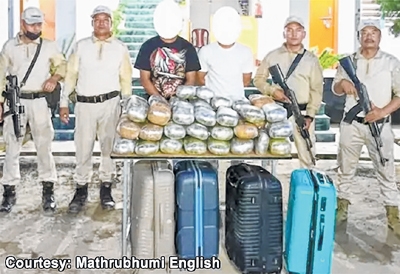
IMPHAL, Oct 7
The lure of quick and substantial profits from illegal drugs has drawn traffickers from various parts of India to Manipur, a North Eastern state that has become a major hub in the country's narcotics network.
Research published in the Journal of Money Laundering reveals that between 2007 and 2023, authorities arrested 115 people from 14 different States in Manipur for drug trafficking, out of a total of 3,627 arrests. The study, titled 'Facets of Drug Trafficking in Manipur, a Border State of India: Volumes, Ethnicity and Value' by Hanjabam Isworchandra Sharma and Shukhdeba Sharma Hanjabam, shows that 42% of these interstate traffickers came from Assam, Manipur's neighbouring State.
The remaining arrested individuals hailed from Bihar, Chhattisgarh, Jammu and Kashmir, Mizoram, Madhya Pradesh, Nagaland, New Delhi, Punjab, Rajasthan, Tamil Nadu, Tripura, West Bengal, and Uttar Pradesh. These figures represent only those who were caught, while many others managed to escape or evade police detection. This indicates that a large number of people are attracted to Manipur's drug trade, highlighting how deeply entrenched the narcotics business has become in the State and how it is spreading its tentacles across India.
An Assam Government official confirmed to The Diplomat that India's drug market is expanding rapidly. The official pointed to cannabis cultivation and brown sugar production in Manipur, alongside Amphetamine Type Stimulants (ATS) such as Yaba and World is Yours (WY) tablets that enter Manipur from Myanmar before being smu-ggled to distant locations through multiple routes.
Years of drug seizures have exposed numerous distribution centers along these smuggling routes, from where narcotics are dispatched to cities throughout India. Officials have identified Siliguri in West Bengal as a particularly active hub for not just narcotics but other illegal goods as well.
According to the research, heroin dominated drug-related police cases in Manipur, accounting for approximately 46% of all complaints. ATS drugs like Yaba and WY tablets ranked second, followed by prescription drugs used without authorization and cannabis. The study notes that heroin reaches Manipur both through smuggling from Myanmar and illegal local production, with several clandestine factories discovered manufacturing heroin from opium.
The scale of poppy cultivation in the State is staggering. Data from the Narcotics and Affairs of Border (NAB) shows that poppy plants worth around Rs 105.97 crore were destroyed between 2018 and 2022. So far, authorities have destroyed approximately 19,547.6 acres of poppy fields in Manipur, though efforts to completely eliminate poppy cultivation continue.
In 2022 alone, the combined value of seized drugs and destroyed poppy plants reached about Rs 1,750 crore (roughly $19.88 million), equivalent to around 0.7% of Manipur's total GDP. The researchers emphasize this is merely "the tip of the iceberg," representing only what authorities managed to intercept and destroy. The actual value circulating in the illegal market is likely far higher, considering the widespread drug consumption and the involvement of influential politicians, senior army officials, and insurgent groups.
The researchers estimate that Manipur's drug economy could be worth around Rs 5,456 crore ($62 million), though they acknowledge this figure might be conservative given that many traffickers escape punishment due to extremely low conviction rates.
Despite the Manipur Government's "War on Drugs" campaign, supported by the Central Government, the study reveals serious systemic weaknesses. Between 2007 and 2023, only 2% of arrested individuals were actually convicted. About 47% of those arrested were released on bail, while another 40% remain in judicial custody.
The frequent interception of drug consignments outside Manipur points to inadequate surveillance in the region. The porous Manipur-Myanmar border, which is relatively easy to cross, provides drug cartels with numerous opportunities to smuggle illegal substances. Recognizing this vulnerability, the Government has fast-tracked a border fencing project with a strict deadline to strengthen border security and curb the flow of narcotics into Indian territory. mathrubhumi.com