Article 3 not applicable to Manipur, says MIYC
|


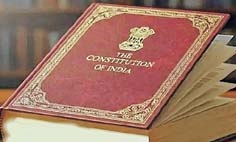
IMPHAL, Nov 26: On the occasion of the Indian Constitution Day, the Manipur International Youth Centre (MIYC) has asserted that Article 3 of India’s Constitution cannot lawfully apply to Manipur.
Manipur’s sovereignty predates India’s. The Manipur State Constitution Act, 1947 established a fully elected legislature by 1948. These facts show that when the Indian Constitution took effect on January 26, 1950, Manipur already had its own legal framework and clearly defined international borders under its own Constitution, the MIYC asserted in a statement.
On October 18, 1948, during the inauguration of the elected Manipur State Assembly (read Parliament), King Bodhachandra formally proclaimed the territorial boundaries of Manipur as historically constituted— Southern portion of China and the gold mines of Sibsagar Valley to the North, the Naga Hills frontiers in the West, the Chindwin River (Ningthee River) to the East and the South, and Chandrapore (Cachar) to the West.
This proclamation, made under the Manipur State Constitution Act of 1947, fixes Manipur’s international boundary as of independence under the doctrine of uti possidetis juris, rendering Article 3 of the Indian Constitution inapplicable to Manipur.
The New York Times published a statement on October 4, 1949 specifying the boundary (area) of Manipur as 18,000 square miles, it said.
The historic maps and treaties confirm Manipur’s boundaries were well established. British- era maps (from 1500 AD Henry Yule’s Map onward) and colonial documents consistently depict Manipur as a distinct State.
Under international law, the borders a territory has at independence are inviolable. The doctrine of uti possidetis juris holds that a newly independent State retains the boundaries it had under colonial administration.
As legal authorities explain, uti possidetis “serves to preserve the boundaries of colonies emerging as States”, and the International Court of Justice has emphasised that its purpose is to protect a new State’s independence and stability by fixing its borders at independence.
Manipur’s boundaries as of 1947 became its permanent borders under international law, and altering those borders would violate this global principle, the MIYC said.
Even though Article 3 empowers Indian Parliament to change State boundaries or create new States, Manipur’s merger in 1949 was arranged “under controversial and coercive circumstances”, not by voluntary agreement. Therefore, Manipur does not fall under the same legal category as other Indian States. As such, Article 3 has no jurisdiction over Manipur’s territory.
Applying Article 3 retroactively to Manipur would violate India’s federal and democratic principles, it said.
As a United Nations member, India is bound by Article 2(4) of the UN Charter, which prohibits using force to change any Nation’s borders.
Any attempt to redraw Manipur’s boundaries by military action or coercion would breach this fundamental rule. The International Court of Justice (ICJ) has repeatedly upheld that borders fixed at independence must be respected, it said.
India’s own plan to divide Manipur on ethnic lines would be “not only illegal but also deeply irresponsible”, since “history has shown that redrawing boundaries based on ethnic affiliations leads to long-standing conflicts”, the MIYC asserted.
The MIYC then called upon the Government of India to respect the inviolability of Manipur’s historical borders. As India commemorated its Constitution, MIYC urged both National authorities and the global community to acknowledge Manipur’s special legal status.
The MIYC has also warned that ignoring this unique history or misusing Article 3 would be legally indefensible and dangerously destabilising.
It further pledged to continue defending Manipur’s rights under domestic and international law in all appropriate forums until Manipur’s territorial integrity is guaranteed.