BSIP scientists find 37K-yr-old bamboo fossil in Manipur
28 Nov 2025 23:31:17
Lucknow, Nov 28
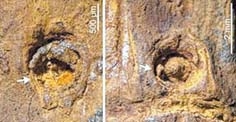
In a discovery that could rewrite Asia's botanical history, scientists from the Birbal Sahni Institute of Palaeosciences (BSIP), Lucknow, have unearthed a 37,000-year-old bamboo fossil in Manipur's Imphal Valley. The find, preserved in the silt-rich deposits of the Chirang River, carries the ghostly scars of thorns—markings that almost never survive the fossilization process. Bamboo fossils are exceptionally rare because their hollow stems and fibrous tissues decay quickly, leaving little trace in the geological record. Yet, during field surveys, BSIP researchers stumbled upon a stem with unusual markings.
Detailed laboratory analysis confirmed these as thorn scars, identifying the specimen as belonging to the genus Chimonobambusa. Comparisons with living thorny bamboos such as Bambusa bambos and Chimonobambusa callosa helped reconstruct its defensive traits and ecological role.
This is the first fossil evidence that thorniness—a defence against herbivores—existed in Asian bamboo during the Ice Age.
The fossil dates back to a period of colder and drier global climates when bamboo vanished from many regions, including Europe.
Its survival in North East India underscores the Indo-Burma biodiversity hotspot as a crucial refuge during times of global stress.
Published in the journal ‘Review of Palaeobotany and Palynology', the study by H Bhatia, P Kumari, NH Singh, and G Srivastava highlights how fragile features like thorn scars were preserved against all odds. The finding not only adds a new dimension to bamboo evolution but also offers insights into palaeoclimate and biogeography, reinforcing Northeast India's role in safeguarding biodiversity during the Ice Age.
TNN