Dots connecting spike in Dengue cases and climate change drawn
|


Yaiphaba Meitei Kharibam
IMPHAL, Nov 27 : Changing weather patterns across the globe has impacted human society in every possible way. Almost every aspect of human life has been affected by climate change.
In the past, summer was the mosquito season and mosquito repellents/coils were mostly used only during this period. Now, mosquito repellents/coils are used even after the harvest season in Poinu as these insects have become prevalent year-round, said a 70 year old elder.
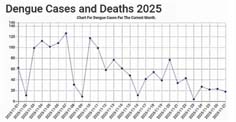
In 2024, Manipur reported a total of 2443 Dengue cases.
Showing a significant rise, 5369 cases have been reported in 2025 (till November 26).
On November 13, the State logged a 201.06% increase in reported Dengue cases compared to last year, with Imphal West recording the highest number of infections among all districts.
Speaking to The Sangai Express, an official of the Health Directorate said Dengue has gone from being a seasonal disease to a perennial disease.
Cases are reported from January to December in Manipur.
The official cited unplanned urban development and increasing temperatures as the main contributing factors for the rise in Dengue cases.
Unplanned urban development often creates environmental conditions that facilitate the creation of more breeding sites for the Dengue mosquito (Aedes).
The National Centre for Disease Control, Government of India, National Health Mission and National Programme on Climate Change and Human Health conduct joint surveys related to human health and climate change and release annual reports.
Meanwhile, the Ministry concerned has advised the respective Climate Change Department of the States to work with relevant departments on vector borne diseases.
According to Dr T Brajakumar, Director, Directorate of Environment & Climate Change, Dengue has a long history with cases reported from as early as 1950.
Dengue mosquitoes thrive in temperatures between 26°C and 28°C which accelerates breeding/egg laying. Higher temperatures accelerate their life cycle, he added.
According to the Directorate of Environment & Climate Change's maximum temperature report from 1970 to 2024, 10 months (March to November) out of 12 have recorded temperatures higher than 30°C. This shows a noticeable rise in temperature in the State, said the Director.
Speaking about contributing factors in the spike in Dengue infections, he said the mosquitoes can thrive during periods of increased rainfall, droughts or floods.
During droughts, Dengue mosquitoes lay eggs in stagnant/stored water kept for household use, he added.
Changing weather patterns, and climate change in general, has created favourable environmental conditions for the mosquitoes to thrive, leading to increased infections throughout the year.
As per the State Action Plan on Climate Change (SAPCC) Manipur, during the last 100 years, the State experienced an increase in minimum temperature by 1.7°C and maximum temperature by 1.5°C.
Rainfall is erratic in nature and total annual rainfall of the State varied from 956.5 mm to 2268.9 mm during the last 60 years.
An increase above 1.7°C temperature and rainfall of 15-19% by mid 2030s has been projected for Manipur.
In India’s Network for Climate Change Assessment (INCCA)’s report, the climate change impacts and vulnerability in Manipur has been highlighted over four sectors, namely, Water Resources, Forests, Health and Agriculture and its allied sectors.
As per the Directorate of Environment & Climate Change's maximum temperature report (2015-2025), the highest temperature for 2015 for the State was reported in Chandel district at 39.98°C in April.
The same district reported the highest temperature in 2016 and 2017, recording 39.86°C in May (2016) and 39.97°C in June (2017).
In 2018, Tamenglong recorded the peak temperature in August with 39.92°C.
Chandel reported 39.99°C in April (2019); Noney reported 39.83°C in June (2020); Tengnoupal-39.97°C in April (2021) and 39.99°C in April (2022).
A striking highlight of the report can be seen in 2023 when temperatures reached 40°C in Tengnoupal in the month of April.
In the same year, Noney district also experienced a blistering 40°C heat in May and September. Again in 2024, temperatures reached 40°C in May and crossed over to 42.19°C in September.
For 2025, the report includes maximum temperatures for the State till the month of August.
As per the data, Imphal West recorded 41.91°C in June.
The fact that temperatures have steadily risen in Manipur can be clearly seen from this report.
Speaking in this connection, Dr Arati Ningombam, Senior Scientist, ICAR-NEH, Manipur Centre, said that concrete drains have been constructed in the name of development. This has led to the disappearance of many fishes/insects that eat mosquito/larvae.
She also stressed on the dangers brought on by rising minimum and maximum temperatures caused by changing weather patterns across the globe.
Though the spike in Dengue cases can be termed as a fallout of drastic climate change, individual responsibility plays a big role in order to lower the number.
Proper understanding and awareness can help in preventing the disease, say experts.
This report is part of the 6th Manipur State Level Media Fellowship Programme, organized by the Department of Environment and Climate Change, focusing on climate change reporting.
IMPHAL, Nov 27 : Changing weather patterns across the globe has impacted human society in every possible way. Almost every aspect of human life has been affected by climate change.
In the past, summer was the mosquito season and mosquito repellents/coils were mostly used only during this period. Now, mosquito repellents/coils are used even after the harvest season in Poinu as these insects have become prevalent year-round, said a 70 year old elder.
In 2024, Manipur reported a total of 2443 Dengue cases.
Showing a significant rise, 5369 cases have been reported in 2025 (till November 26).
On November 13, the State logged a 201.06% increase in reported Dengue cases compared to last year, with Imphal West recording the highest number of infections among all districts.
Speaking to The Sangai Express, an official of the Health Directorate said Dengue has gone from being a seasonal disease to a perennial disease.
Cases are reported from January to December in Manipur.
The official cited unplanned urban development and increasing temperatures as the main contributing factors for the rise in Dengue cases.
Unplanned urban development often creates environmental conditions that facilitate the creation of more breeding sites for the Dengue mosquito (Aedes).
The National Centre for Disease Control, Government of India, National Health Mission and National Programme on Climate Change and Human Health conduct joint surveys related to human health and climate change and release annual reports.
Meanwhile, the Ministry concerned has advised the respective Climate Change Department of the States to work with relevant departments on vector borne diseases.
According to Dr T Brajakumar, Director, Directorate of Environment & Climate Change, Dengue has a long history with cases reported from as early as 1950.
Dengue mosquitoes thrive in temperatures between 26°C and 28°C which accelerates breeding/egg laying. Higher temperatures accelerate their life cycle, he added.
According to the Directorate of Environment & Climate Change's maximum temperature report from 1970 to 2024, 10 months (March to November) out of 12 have recorded temperatures higher than 30°C. This shows a noticeable rise in temperature in the State, said the Director.
Speaking about contributing factors in the spike in Dengue infections, he said the mosquitoes can thrive during periods of increased rainfall, droughts or floods.
During droughts, Dengue mosquitoes lay eggs in stagnant/stored water kept for household use, he added.
Changing weather patterns, and climate change in general, has created favourable environmental conditions for the mosquitoes to thrive, leading to increased infections throughout the year.
As per the State Action Plan on Climate Change (SAPCC) Manipur, during the last 100 years, the State experienced an increase in minimum temperature by 1.7°C and maximum temperature by 1.5°C.
Rainfall is erratic in nature and total annual rainfall of the State varied from 956.5 mm to 2268.9 mm during the last 60 years.
An increase above 1.7°C temperature and rainfall of 15-19% by mid 2030s has been projected for Manipur.
In India’s Network for Climate Change Assessment (INCCA)’s report, the climate change impacts and vulnerability in Manipur has been highlighted over four sectors, namely, Water Resources, Forests, Health and Agriculture and its allied sectors.
As per the Directorate of Environment & Climate Change's maximum temperature report (2015-2025), the highest temperature for 2015 for the State was reported in Chandel district at 39.98°C in April.
The same district reported the highest temperature in 2016 and 2017, recording 39.86°C in May (2016) and 39.97°C in June (2017).
In 2018, Tamenglong recorded the peak temperature in August with 39.92°C.
Chandel reported 39.99°C in April (2019); Noney reported 39.83°C in June (2020); Tengnoupal-39.97°C in April (2021) and 39.99°C in April (2022).
A striking highlight of the report can be seen in 2023 when temperatures reached 40°C in Tengnoupal in the month of April.
In the same year, Noney district also experienced a blistering 40°C heat in May and September. Again in 2024, temperatures reached 40°C in May and crossed over to 42.19°C in September.
For 2025, the report includes maximum temperatures for the State till the month of August.
As per the data, Imphal West recorded 41.91°C in June.
The fact that temperatures have steadily risen in Manipur can be clearly seen from this report.
Speaking in this connection, Dr Arati Ningombam, Senior Scientist, ICAR-NEH, Manipur Centre, said that concrete drains have been constructed in the name of development. This has led to the disappearance of many fishes/insects that eat mosquito/larvae.
She also stressed on the dangers brought on by rising minimum and maximum temperatures caused by changing weather patterns across the globe.
Though the spike in Dengue cases can be termed as a fallout of drastic climate change, individual responsibility plays a big role in order to lower the number.
Proper understanding and awareness can help in preventing the disease, say experts.
This report is part of the 6th Manipur State Level Media Fellowship Programme, organized by the Department of Environment and Climate Change, focusing on climate change reporting.