Will “One North East” heal the region or deepen its fault lines?
07 Dec 2025 00:00:48
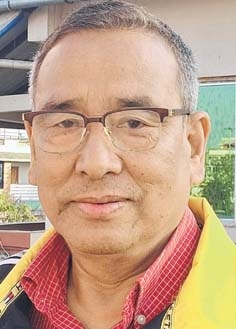
Dr Raj Singh
If you were in Agartala on that late November afternoon, you might have felt the buzz in the air. The Astabal Ground was brimming with colour - tribal shawls, indigenous flags, and slogans that echoed a long history of hurt and hope. Leaders from various Northeastern states stood shoulder to shoulder, declaring that the region would finally “speak in one voice so Delhi must listen.” For many, it felt historic: perhaps this was the moment when the Northeast would turn a page.
However, if we pause, take a step back, and look beyond the obvious, we begin to see cracks beneath the surface of the celebration. The new movement, One North East, carries within it deep, unresolved contradictions. Unless confronted honestly, those contradictions could cause the movement to wither within a few years.
1. Unity or a Mirage? Ethnic vs Civic Politics
The first question is deceptively simple: What kind of unity is One North East advocating? The public messaging appears to weave two narratives together: one about Delhi’s neglect and the other about the special status and grievances of tribal communities. Most of the leaders at the forefront are tribal politicians or heads of tribal autonomous bodies, and much of the rhetoric focuses on protecting “indigenous lands, customs and culture.”
But the Northeast is not a homogeneous cultural block. More than 200 tribes live here, alongside major non-tribal communities such as Meiteis, Assamese caste groups, Bengalis and Nepalis. All of them suffer the region’s chronic problems - poor connectivity, weak infrastructure, unemployment, drug trafficking, and long-standing governance deficits.
Yet, non-tribal communities are mostly bystanders, not partners, in this movement. This raises a central paradox: Can a regional movement succeed if it is framed primarily as a tribal movement? Political theorists like Charles Tilly remind us that durable coalitions depend on broad, inclusive frames - not narrow identity walls. A movement that begins by excluding large populations risks collapsing under its own exclusivity.
2. Kinship, Clans and the Burden of “Othering”
Anyone who has grown up in the Northeast knows that kinship loyalty among the tribals is powerful - sometimes even sacred. But anthropology teaches us that when kinship becomes a political principle, it creates tight ingroups and suspicious outgroups.
Fredrik Barth’s seminal work on ethnic boundaries explains that communities sustain themselves by highlighting differences. In the Northeast, we see this every day: tribe vs tribe, clan vs clan, valley vs hills, and tribal vs non-tribal. Add to that the overlapping maps of ethnic homelands - Greater Nagalim, Zale’n-gam, autonomous hill states, Sixth Schedule councils, and you have a region where imagined futures collide violently with each other.
Against this backdrop, One North East’s calling for tribal unity sounds inspiring, but only for as long as nobody asks real questions. For example:
- How do Nagas, Kukis, Meiteis, Bodos and Garos reconcile competing territorial imaginations?
- How do Christian, Hindu, animist, and syncretic belief systems harmonize their identity politics?
- How does one unify tribes that have unsettled boundary disputes with their neighbours?
Unity cannot be declared from a podium; it must be built painstakingly through trust, dialogue, and compromise. One North East has not yet begun that work.
3. Asymmetry of Power: Who Really Leads the Movement?
Power is unevenly distributed in the Northeast. Some communities have long-standing armed insurgent groups, robust patronage networks, and territorial councils. Others have none. This imbalance shapes who gets to speak, who gets to negotiate, and who gets left behind.
When elite tribal leaders who already wield political or military influence invite others to join a new “unity platform,” smaller tribes naturally wonder:
- Is this a collective movement or a repackaged elite alliance?
- Will we get equal voice, or just fill seats at the rally?
Political economist Mancur Olson called this the “collective action problem”: those with resources dominate, while those without become dependents. Unless One North East finds ways to institutionalize fairness - equal say, equal representation, equal bargaining power- it will remain top-heavy and unstable.
4. The Victim Narrative in a Changing India
No one denies that the Northeast has been neglected for decades. From connectivity to healthcare, from higher education to markets, the region lags behind national averages. But how the movement frames its grievances matters immensely.
Today, One North East relies heavily on a victimhood narrative - painting tribes as besieged by demographic threats, cultural dilution, and state inaction. While emotionally powerful, this stance is increasingly out of sync with India’s shifting policy climate. The Centre is moving towards economic-criteria-based affirmative action, debating whether benefits should be tied to economic need rather than ethnic identity.
If One North East’s demands revolve solely around more ethnic insulation and more special protections, it risks becoming politically obsolete. Even worse, development economists warn of a “dependency trap,” where overprotection lowers incentives for entrepreneurship, competitiveness and skill-building. Young people need opportunities, not only assurances of safeguards.
5. Organization Without Democracy? A Recipe for Collapse
Movements rarely fail because of their slogans. They fail because of poor organization. So far, One North East appears to have been designed by a small circle of like-minded leaders. It resembles what organizational theorists call an “elite-invented platform” - a top-down entity where leaders design the agenda and expect the masses to follow.
But sustainable movements work differently. They are “facilitated platforms” - leaders act as convenors, not commanders. They let people shape the agenda through debate, elect representatives democratically, and ensure transparency in finances and decision-making.
Without such democratic architecture, One North East risks being dismissed as just another political experiment driven by personality cults.
6. What Would a Truly Sustainable “One NorthEast” Look Like?
If the movement wishes to survive and matter, it must deliver three transformations:
a) From Tribal Unification to Northeast People’s Unification
The first step is conceptual. The Northeast’s problems are regional, not tribal. Its solutions must also be regional. This means embracing non-tribal communities as equal stakeholders. Only then can the region present a united front on issues such as connectivity, border trade, higher education, and peace- building.
b) From Protection-Seeking to Opportunity-Seeking
The manifesto must not only demand safeguards but also create pathways to excellence:
- quality universities and research centres,
- start-up ecosystems,
- skill partnerships with Southeast Asia,
- cross-border trade opportunities with Bangladesh, Myanmar and beyond.
Young Northeasterners are not looking for crutches; they are looking for platforms to compete globally.
c) From Owners to Facilitators
A people’s movement cannot be owned. It must be built:
- through public conventions,
- transparent elections,
- equal representation for tribes and non-tribals,
- and periodic reviews of demands.
Latin American indigenous movements like Ecuador’s CONAIE show this clearly: movements survive when leaders rotate, account, and listen.
Beyond the Obvious
The obvious story is that a long-marginalised region is finally asserting itself. The less obvious story is that a movement built on exclusive identities, survival anxieties, and elite choreography may not only fizzle but deepen the very divides it claims to bridge.
A truly historic One North East would take the harder path: reimagining identity without weaponizing it, empowering people without isolating them, and building unity through democracy - not symbolism. That is the introspection the region needs. That is the conversation the Northeast deserves - beyond sentiment, beyond slogans, and yes, beyond the obvious.