Barring MLAs from Assembly duties : Executive action needed
14 Jul 2025 07:41:40
Birendra Laishram
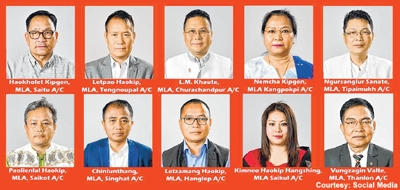
From a legal and socio-political perspective, can civil society organizations (CSOs) bar Members of the Legislative Assembly (MLAs) from their Assembly duties?
Legal Framework
Constitutional Mandate : Elected MLAs have a Constitutional duty to represent their constituents. While Article 190 allows resignation, coercion to abstain from duties could be challenged as undue influence.
Unlawful Coercion : If a CSO threatens or coerces MLAs to abstain from Assembly participation, it may violate Section 171C (undue influence at elections) or Sections 503/506 (criminal intimidation) of the IPC, and potentially constitute contempt of the legislature.
Democratic Process : Directives undermining the democratic process, especially if binding or enforced through threats, may prompt intervention from the Election Commission or the Governor if MLAs are prevented from fulfilling their duties.
Kuki Inpi Manipur (KIM) Directive: KIM's July 4, 2025 resolution barring Kuki-Zo MLAs from participating in Government formation, while reflecting collective political will, is not legally binding unless voluntarily complied with. Pressured MLAs could file a writ petition (Article 226), seek protection under Article 21 (right to life and liberty), or request intervention from the Speaker or Governor.
Governor or President
As the state is under President’s Rule and the Assembly is under suspended animation the order of the KIM cannot be materialised as the MLAs are already denied participation in Assembly duties. Had the order of the KIM been in normal situation, the KIM’s directive would have violated Constitutional supre- macy and undermined democratic representation. It creates a parallel authority that challenges the sovereignty of the Assembly. It threatens State inte- grity by promoting ethnic exclusion and separatism. Hence, a PIL can be initiated.
The KIM's decree, which seeks to ban Kuki Legislative Assembly members (MLAs) affiliated with Kuki-based armed groups from participating in the State's legislative proceedings, raises significant Constitutional and political questions. Scrutinizing existing legal precedents and Constitutional provisions reveals that this action by a non-governmental community organization is unpre- cedented in India. There is no recorded instance where a community body, lacking Governmental authority, has successfully imposed a ban on democratically elected MLAs representing a specific community, effectively preventing them from fulfilling their legislative duties as a means to advocate for the creation of a separate State. This is an unusual and potentially dangerous approach to political advocacy.
Should the KIM, or any other non-state actor, attempt to prevent duly elected representatives from carrying out their Constitutionally mandated duties based on their ethnicity or political beliefs, such actions could be legally cha- llenged on multiple grounds. First, it could be argued as a violation of Article 14 of the Indian Constitution, which guarantees equality before the law. This Article ensures that all citizens are treated equally and that no one is discriminated against based on their community identity.
Second, such a ban could be seen as an infringement of Article 19(1)(g), which guarantees the freedom to practice any profession, or to carry on any occupation, trade or business. Preventing MLAs from partici- pating in legislative proceedings effectively restricts their ability to perform their duties as elected representatives.
Third, and perhaps most significantly, such actions could be considered a threat to the integrity of the State, as enshrined in Article 1 and Article 355 of the Constitution. These articles emphasize the importance of maintaining the unity and integrity of the Nation and safeguarding against internal disturbances.
Therefore, a Public Interest Litigation (PIL) could be justifiably filed to address this situation. The objectives of such a PIL would be to restrain non-state actors from issuing unconsti- tutional directives that undermine the democratic process. Furthermore, a PIL could seek to uphold the rights of elected MLAs to participate fully in the Assembly, ensuring that they can represent their constituents and contribute to the legislative process without undue interference. Ultimately, the goal of a PIL would be to safeguard the unity and integrity of the State by preventing actions that could potentially destabilize the region and undermine the rule of law.
Several key case laws reinforce the principle that only judicial or Constitutional mechanisms can disqualify MLAs or restrict their participation in legislative proceedings.
CSOs wield significant influence, often navigating the space between democratic expression and potential coercion. Their ac-tions are generally permi- ssible when advocating, protesting, or lobbying. However, when they cross the line into coercion, intimidation, or obstruction of elected officials' duties, legal and Constitutional boundaries are tested. The examples above illustrate a spectrum of influence, from moral persuasion to direct pressure, each demanding a complex response.
Legal and Ethical Considerations
Freedom of Expression vs. Undue Influence : CSOs have a right to express their views, but this right is not absolute. Section 171C of the IPC, dealing with undue influence in elections, becomes relevant if a CSO's actions are deemed to substantially interfere with the free exercise of electoral rights or legislative duties. The threshold for "undue influence" involves assessing whether the CSO's actions create illegitimate constraints on an MLA's ability to act independently.
Right to Representation vs. Community Demands : Elected officials have a Constitutional duty to represent their constituents, a duty that cannot be easily relinquished. Community demands, while important, cannot supersede the MLA's fundamental obligation to participate in the legislative process, unless through legally recognized mechanisms such as resignation. The KIM directive exemplifies this tension, where the will of community clashes with individual legislative responsibility.
Legitimacy and Proportionality : The legitimacy of CSO actions hinges on proportionality. Actions that directly and demonstrably undermine the democratic process are less likely to be legally or ethically justifiable. Conversely, actions that seek to influence policy through legitimate means, such as peaceful protests or lobbying, are generally protected.
Conclusion
KIM, a civil society organization without statutory or Constitutional authority, issues resolutions lacking legal binding in India. These directives, framed as community consensus on ancestral land, identity, and rights, hold moral and political weight within the Kuki-Zo community but lack formal legal power. Legal action against KIM would depend on whether its resolutions violate Constitutional principles (e.g., undermining democracy or inciting disobedience), threaten public order or national integrity (e.g., promoting secession or obstructing governance).
If perceived as promoting separatism or unlawful governance, KIM could face action under UAPA, a sensitive measure requiring strict justification. It is advisable to take up befitting action against the KIM before it falls in the hand of judiciary. The Supreme Court prioritizes exe- cutive action, rather than judicial intervention, for resolving Manipur's ethnic crisis.
From a legal and socio-political perspective, can civil society organizations (CSOs) bar Members of the Legislative Assembly (MLAs) from their Assembly duties?
Legal Framework
Constitutional Mandate : Elected MLAs have a Constitutional duty to represent their constituents. While Article 190 allows resignation, coercion to abstain from duties could be challenged as undue influence.
Unlawful Coercion : If a CSO threatens or coerces MLAs to abstain from Assembly participation, it may violate Section 171C (undue influence at elections) or Sections 503/506 (criminal intimidation) of the IPC, and potentially constitute contempt of the legislature.
Democratic Process : Directives undermining the democratic process, especially if binding or enforced through threats, may prompt intervention from the Election Commission or the Governor if MLAs are prevented from fulfilling their duties.
Kuki Inpi Manipur (KIM) Directive: KIM's July 4, 2025 resolution barring Kuki-Zo MLAs from participating in Government formation, while reflecting collective political will, is not legally binding unless voluntarily complied with. Pressured MLAs could file a writ petition (Article 226), seek protection under Article 21 (right to life and liberty), or request intervention from the Speaker or Governor.
Governor or President
As the state is under President’s Rule and the Assembly is under suspended animation the order of the KIM cannot be materialised as the MLAs are already denied participation in Assembly duties. Had the order of the KIM been in normal situation, the KIM’s directive would have violated Constitutional supre- macy and undermined democratic representation. It creates a parallel authority that challenges the sovereignty of the Assembly. It threatens State inte- grity by promoting ethnic exclusion and separatism. Hence, a PIL can be initiated.
The KIM's decree, which seeks to ban Kuki Legislative Assembly members (MLAs) affiliated with Kuki-based armed groups from participating in the State's legislative proceedings, raises significant Constitutional and political questions. Scrutinizing existing legal precedents and Constitutional provisions reveals that this action by a non-governmental community organization is unpre- cedented in India. There is no recorded instance where a community body, lacking Governmental authority, has successfully imposed a ban on democratically elected MLAs representing a specific community, effectively preventing them from fulfilling their legislative duties as a means to advocate for the creation of a separate State. This is an unusual and potentially dangerous approach to political advocacy.
Should the KIM, or any other non-state actor, attempt to prevent duly elected representatives from carrying out their Constitutionally mandated duties based on their ethnicity or political beliefs, such actions could be legally cha- llenged on multiple grounds. First, it could be argued as a violation of Article 14 of the Indian Constitution, which guarantees equality before the law. This Article ensures that all citizens are treated equally and that no one is discriminated against based on their community identity.
Second, such a ban could be seen as an infringement of Article 19(1)(g), which guarantees the freedom to practice any profession, or to carry on any occupation, trade or business. Preventing MLAs from partici- pating in legislative proceedings effectively restricts their ability to perform their duties as elected representatives.
Third, and perhaps most significantly, such actions could be considered a threat to the integrity of the State, as enshrined in Article 1 and Article 355 of the Constitution. These articles emphasize the importance of maintaining the unity and integrity of the Nation and safeguarding against internal disturbances.
Therefore, a Public Interest Litigation (PIL) could be justifiably filed to address this situation. The objectives of such a PIL would be to restrain non-state actors from issuing unconsti- tutional directives that undermine the democratic process. Furthermore, a PIL could seek to uphold the rights of elected MLAs to participate fully in the Assembly, ensuring that they can represent their constituents and contribute to the legislative process without undue interference. Ultimately, the goal of a PIL would be to safeguard the unity and integrity of the State by preventing actions that could potentially destabilize the region and undermine the rule of law.
Several key case laws reinforce the principle that only judicial or Constitutional mechanisms can disqualify MLAs or restrict their participation in legislative proceedings.
CSOs wield significant influence, often navigating the space between democratic expression and potential coercion. Their ac-tions are generally permi- ssible when advocating, protesting, or lobbying. However, when they cross the line into coercion, intimidation, or obstruction of elected officials' duties, legal and Constitutional boundaries are tested. The examples above illustrate a spectrum of influence, from moral persuasion to direct pressure, each demanding a complex response.
Legal and Ethical Considerations
Freedom of Expression vs. Undue Influence : CSOs have a right to express their views, but this right is not absolute. Section 171C of the IPC, dealing with undue influence in elections, becomes relevant if a CSO's actions are deemed to substantially interfere with the free exercise of electoral rights or legislative duties. The threshold for "undue influence" involves assessing whether the CSO's actions create illegitimate constraints on an MLA's ability to act independently.
Right to Representation vs. Community Demands : Elected officials have a Constitutional duty to represent their constituents, a duty that cannot be easily relinquished. Community demands, while important, cannot supersede the MLA's fundamental obligation to participate in the legislative process, unless through legally recognized mechanisms such as resignation. The KIM directive exemplifies this tension, where the will of community clashes with individual legislative responsibility.
Legitimacy and Proportionality : The legitimacy of CSO actions hinges on proportionality. Actions that directly and demonstrably undermine the democratic process are less likely to be legally or ethically justifiable. Conversely, actions that seek to influence policy through legitimate means, such as peaceful protests or lobbying, are generally protected.
Conclusion
KIM, a civil society organization without statutory or Constitutional authority, issues resolutions lacking legal binding in India. These directives, framed as community consensus on ancestral land, identity, and rights, hold moral and political weight within the Kuki-Zo community but lack formal legal power. Legal action against KIM would depend on whether its resolutions violate Constitutional principles (e.g., undermining democracy or inciting disobedience), threaten public order or national integrity (e.g., promoting secession or obstructing governance).
If perceived as promoting separatism or unlawful governance, KIM could face action under UAPA, a sensitive measure requiring strict justification. It is advisable to take up befitting action against the KIM before it falls in the hand of judiciary. The Supreme Court prioritizes exe- cutive action, rather than judicial intervention, for resolving Manipur's ethnic crisis.