Are homestays boosting tourism or hurting Loktak ?
|


By Our Staff Reporter
IMPHAL, Feb 12 : Homestays in Loktak Lake have certainly revived tourism in Manipur, but are these floating accommodations quietly suffocating the ecosystem of the lake ?
While homestays provide a unique experience and an opportunity to tourists to spend nights on the lake, an absence of strict regulations could hurt the lake's ecosystem, experts have said.
The waste generated at the homestays, if not disposed of properly, could contaminate the water and hurt aquatic life.
The Loktak Lake is about 266 square kilometres in size.
The lake was designated as a Ramsar wetland of international importance on March 23, 1990.
The Loktak Lake is protected by the Manipur Loktak Lake (Protection) Act 2006, and The Manipur Loktak Lake (Protection) Rule 2008.
The lake is divided into a core (middle) zone, which is about 70.30 sq km and a buffer zone, surrounding the core zone.
The core zone is a "no development" or "totally protected area" where all development activities including building of huts or homestays are strictly prohibited.
Setting up of new industries and expansion of existing industries including fish processing units are prohibited in the buffer zone.
Discharge of untreated waste and effluent in the lake is prohibited, according to The Manipur Loktak Lake (Protection) Act, 2006.
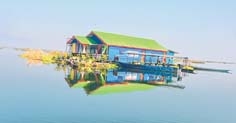
However, in recent times, the number of homestays in Loktak Lake has increased exponentially. While there are homestays all over the lake, the water around Karang island now houses over 40 such floating structures.
The homestays have all the necessary materials including food and water, tourists would need during their stay.
The homestays have gas stoves, where tourists and people visiting for a picnic can cook food themselves.
The homestays also have toilets connected to specialised bio-digester septic tanks, but no provisions for safe disposal of the effluent.
Unfiltered and untreated effluent and other human generated waste including plastics pose a significant threat to the health of the lake.
In homestays this reporter visited, there were no provisions for safe collection, transportation and disposal of the runoff waste (effluent) from the septic tanks.
While the effluent from a bio-digester septic tank is significantly cleaner than traditional septic tank discharge, it is not 100 percent safe for directly releasing into sensitive water bodies such as the Loktak without further treatment.
While bio-digester septic tank reduces organic solids and pathogens, the effluent can still contain high levels of nutrients, nitrogen and phosphorous. When directly dumped into the lake, this can cause eutrophication or high algal blooms which is harmful.
A high algal bloom depletes oxygen, kills fishes, leads to loss of biodiversity, toxicity and degradation of ecosystem.
A man, who has been running a homestay in the lake for the last 5 months, said it (running the homestay) is able to sustain his family.
"We used to fish in the lake to earn a meagre income. Now this (homestay) has changed things positively for us. Running this homestay earns us far better than fishing," said the man.
A short stay for a morning at the homestay costs Rs 300 per person, and Rs 500 per person a night stay.
He said homestays are becoming popular among local tourists.
Evidently, like he said, homestays have gained popularity among the local tourists who visit the lake with friends and families, and new homestays are popping up all over the lake.
An official of the Loktak Development Authority (LDA), meanwhile, said the structures (homestays) are "illegal" according to The Manipur Loktak (Protection) Act 2006, and The Manipur Loktak Lake (Protection) Rules, 2008. What is more the Project Director and the Superintending Engineer retired on January 31 this year and there have been no replacements so far.
On the rising number of homestays in the lake, the officer said the LDA doesn't know the exact number of structures pending a survey.
There have been discussions for conducting a survey, but in the absence of the top officers, the LDA is not effective, added the officer.
The LDA officer, nonetheless, admitted that the "mushrooming" of homestays in the lake, if not regulated properly, could hurt the lake's ecosystem.
According to the Act and Rules, construction of all structures is prohibited in the core zone and the buffer zone. While these structures including homestays and Phoomsang (huts) are "illegal" by law, the LDA is unable to act effectively against them, said the officer.
The officer claimed, police complaints have been struck down in the past due to political influence.
Further, the lack of a provision for imposing fines/penalties on violators has also emboldened people to flout the rules concerning the lake, the officer said.
The rising number of homestays in the lake is a matter of serious concern which could hurt the lake. A thorough survey is required to take necessary measures, said the officer.
While the LDA has been set up to protect and safeguard the lake, key vacancies in the body have paralysed it, reiterated the officer.
For example, an additional machine to clear Phumdi (floating organic matter) has arrived. But, in the absence of the top officers, the LDA is unable to effectively carry out the work, added the officer.
An empowered LDA can carry out its duties more efficiently. Besides protecting the lake and its ecosystem, it is also the responsibility of the LDA to strike a balance and save the sustenance of the fishermen and locals around the lake, said the officer.