Porous India-Myanmar border sees sharp spike in infiltration Indo-Myanmar border sanitised, 9 IEDs destroyed
|


DELHI/IMPHAL, Feb 18
Infiltration has for long remained a security concern for India.
Home Minister Amit Shah had on Monday said that the Government would establish a stronger system to tackle the menace.
According to a reply by Minister of State for Home Affairs Nityanand Rai in the Lok Sabha during the Winter Session, a total of 23,926 infiltrators were arrested across various border regions between 2014 and 2025.
However, the number of arrested infiltrators accounted for just 0.003 per cent of the total population of the 16 bordering States in the past around 12 years (till November, 2025).
While around 86 per cent of infiltrators have been caught along the India–Bangladesh border, the border with Myanmar remains the most porous, with a sharp spike in infiltration in over a decade.
The total number of infiltrators caught in India increased from 2,262 in 2014 to 3,120 in 2025 (till November). However, the number of infiltrators per crore population saw a marginal increase from 28 in 2014 to 35 in 2025.
The number of infiltrators per crore population of the India-Myanmar border saw a sharp increase from 58 in 2014 to 525 in 2025 in comparison to the India-Bangladesh border, which saw a marginal increase from 159 to 176 during this period.
India-Bangladesh border, which is the country's longest one, accounted for the highest number of infiltrators arrested per km.
As many as 878 “infiltrators” were caught along the India-Myanmar border over the past two years, the Union Ministry of Home Affairs (MHA) had informed the Lok Sabha on December 16, 2025, reports Business Today.
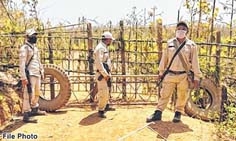
Even as infiltration from across the border has seen a spike, the Spear Corps of the Indian Army has sanitised a 2.6-kilometre stretch along the Indo-Myanmar border in dense jungle terrain in Manipur, destroying nine improvised explosive devices (IEDs) and two unexploded ordnances during the operation, a defence official said on February 18, reports PTI.
The sanitisation drive was carried out by the Red Shield Division following a requisition from government agencies to facilitate the resumption of stalled border fencing work. The operation was initiated after intelligence inputs indicated the presence of IEDs and unexploded ordnance in the area, allegedly planted by insurgent groups.
According to officials, the operation was conducted between January 16 and 17 along the Indo-Myanmar border at Yangoubung in Manipur. Despite difficult security conditions and challenging jungle terrain, the team successfully cleared and sanitised a corridor measuring approximately 2.6 kilometres in length and 13 metres in width.
During the operation, nine IEDs and two unexploded ordnances were detected and destroyed, ensuring the safety of personnel engaged in critical infrastructure activities.
The successful clearance of the corridor has enabled survey teams and construction agencies to proceed with essential border infrastructure work, officials added.