Yumnam Khemchand and the weight of responsibility in troubled times
|


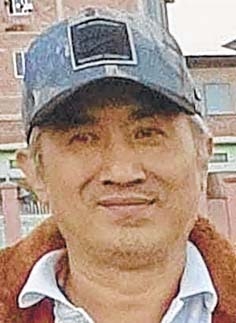
Sanjoo Thangjam
Yumnam Khemchand’s assumption of office as the Chief Minister of Manipur comes at one of the most critical and defining junctures in the State’s contem- porary history. Manipur today stands at a crossroad marked by deep social fragmentation, prolonged poli- tical fatigue, economic uncertainty, institutional stress and a profound yearning for peace and stability. Years of conflict, mistrust and interrupted governance have left visible scars on society. To take charge of governance at such a moment is not merely a political elevation or a ceremonial transition of power; it is an immense moral, administrative, and historical responsibility.
The office he now occupies carries the weight of a wounded State. Expectations are high, patience is thin, and public confidence has been severely tested. In such an environment, leadership is judged not by intent or rhetoric, but by the ability to steady institutions, reassure communities, and act decisively without aggravating existing fault lines. The present moment demands statesmanship rather than routine politics, and courage tempered by restraint rather than impulsive assertion.
Khemchand’s elevation to the top executive position was neither accidental nor sudden. It is the outcome of decades of public engagement, organisational experience and sustained navigation of complex social and political terrains. His political journey has unfolded gradually, shaped by exposure to governance at different levels and by long-standing involvement in public life. Becoming Chief Minister at this juncture is not an easy honour; it is a test of leadership under pressure where every decision carries consequences far beyond political arithmetic or party advantage.
Manipur’s crisis is not singular in nature. It is layered and multidimensional, involving questions of identity, governance, security, economy, and trust. Any Chief Minister stepping into office today inherits a legacy of unresolved grievances and competing narratives. The challenge before Khemchand is therefore not simply adminis- trative efficiency but the capacity to listen across divides, to act with fairness and to signal clearly that governance will be guided by constitutional values rather than expediency or factional pressure.
Among colleagues and observers, Khemchand is often described as a leader who balances accessibility with discipline. His public conduct reflects a measured blend of firmness and approachability, a quality that becomes particularly relevant in a society strained by mistrust and polarisation. In times of prolonged crisis, the distance between leaders and the people often widens, breeding suspicion and alienation. For Manipur, the challenge ahead is not governance in its routine sense, but leadership capable of healing, reassuring, and rebuilding confidence among citizens who have endured uncertainty, displacement, and fear.
Leadership in such times also demands emotional intelligence. The Chief Minister must be seen as firm without being rigid, empathetic without appearing weak, and decisive without appearing reckless. These are delicate balances that cannot be achieved through policy announcements alone. They require consistency of conduct, restraint in speech, and a visible commitment to fairness across communities and institutions.
Beyond politics, Khemchand’s background reflects sustained engagement with discipline and self-development. His long association with Taekwondo, both as a practitioner and mentor has been widely acknowledged. He has received international recognition in Traditional Taekwondo, reflecting years of perseverance, ethical training and respect for structure and hierarchy. Such discipline-oriented training carries relevance beyond sports. It nurtures patience, self-control, respect for process, and the ability to withstand pressure—qualities indispen- sable to public leadership in turbulent times.
In a political culture often criticised for impul- siveness and performative aggression, disci- pline assumes particular impor- tance. The ethos of martial arts emphasises restraint as much as strength, control as much as action. If internalised meaningfully, such training can shape a leadership style that prioritises deliberation over reaction and long-term stability over short-term political gain.
Khemchand has also experienced the realities of entrepreneurship. In his earlier years, he was associated with a business venture at Paona Bazar known as Sang Rock, which became well known for contemporary fashion, music culture, and a youthful aesthetic that stood apart from conventional retail of its time. The enterprise was not merely a commercial activity but a cultural space that resonated with a generation seeking expression and identity in a rapidly changing urban environment.
Along with close family members, the venture engaged with the everyday challenges of trade, work-force management, financial uncertainty, and survival in a competitive urban econo-my. This exposure to grassroots economic realities offers a perspective often absent in purely career- driven political trajec- tories. It brings familiarity with the anxieties of small businesses, the fragility of livelihoods, and the impact of instability on ordinary economic life.
His interest in music and contemporary culture was not ornamental or performative, but an extension of how he connected with people across generations. Such engagement matters in a State where youth alienation and frustration remain pressing concerns. A leader who understands cultural currents is better positioned to engage meaningfully with younger citizens not merely as subjects of policy but as stakeholders in the State’s future.
In public discourse, Khemchand has occasionally been subjected to mockery for his willingness to dance at public events. Such criticism, however, overlooks the cultural and social context from which he comes. Participation in dance, music and performance has long been an integral part of Manipuri public life and political culture. From local community gatherings to National platforms, cultural expression has often served as a bridge between leaders and the people, softening hierarchies and fostering familiarity rather than distance.
In Manipur, dance is not entertainment alone; it is heritage, identity, and social expression. To participate publicly in cultural performance is often an act of affirmation rather than frivolity. When leaders engage in such practices, they reaffirm shared traditions and signal belonging, reflecting a leadership style that is comfortable in the public gaze and rooted in cultural confidence. It conveys an ease with people, an openness to proximity, and a confidence that does not rely on constant insulation from the public.
Even global leaders, including former US President Barack Obama have participated in cultural performances during public engagements in India and elsewhere. Such moments are commonly interpreted as gestures of respect and openness. Seen in this light, Khemchand’s participation in dance is not a lapse in seriousness but an expression of simplicity, accessibility, and trust in the people he serves.
It also quietly reflects a disposition that does not seek excessive separation through layers of security, but one that values presence and connection in public spaces. Far from diminishing authority, such moments humanise leadership, reduce fear-driven distance, and strengthen the emotional bond between leadership and the people.
The Chief Minister is known to the author through extended family association and prior professional interaction, during which he has consistently maintained professional distance and decorum. Such conduct reflects an understanding of boundaries, roles, and institutional propriety. His disciplined public conduct is reinforced by personal influences rooted in the judiciary, law enforcement, and cultural pursuits, alongside his own training as a Taekwondo master.
As Chief Minister, expectations from him are understandably high. People are not seeking rhetoric, symbolism, or carefully worded assurances. They are seeking stability, fairness, and visible action. Governance in the present moment demands clarity of intent, inclusiveness, and the courage to take difficult decisions without inflaming divisions. It requires the ability to resist pressure from competing interests while remaining accountable to democratic principles.
The task before him is formidable. It includes restoring faith in institutions, protecting democratic space, ensuring the safety and dignity of citizens, and rebuilding administrative credibility. Governance must reach the last mile without discrimination or fear. Law must be seen to operate independently and impartially. Relief, rehabilitation, and reconciliation must be pursued with sincerity rather than optics.
What Manipur requires today is not merely administrative efficiency, but moral authority anchored in action. The Latin phrase facta non verba—deeds, not words—captures the essence of what the present dispensation must embody. Words have long exhausted their value in the State. Only credible, consistent, and transparent action can restore trust.
May the Almighty God guide him in every decision and responsibility he carries on behalf of the people of Manipur.
The writer is a journalist based in Imphal